
In 2023, following exhibitions that I held about the violence and injustice of the Islamic Republic in Iran towards women, in support of the Woman, Life, Freedom movement, Kulturhuset, the art center in the city of Borås, in Sweden, shut down my installation.
BoråsTidning, the local newspaper of Borås city, published an interview by Hanna Grahn.
The exhibition, which had already been approved for display, was canceled due to fears that, following a Quran burning, it might provoke further anger among the city’s Muslim community.
This decision outraged Sweden because the “Concrete Setting” installation Concretesetting depicted statues of veiled women covered in concrete and hanged. It was a protest art piece against the hijab and the policies of the Islamic Republic, also supporting the Woman, Life, Freedom movement, and should not have been equated with Quran burning.
The article sparked protests from most of the newspapers, news networks, and a great wave of media against the shutdown in Sweden and other European countries.
Finally SETTING got the permit for showcasing in Artmuseum of Borås for 6 months
Democracy, freedom of speech, artistic freedom, and the right to protest against radical Islam were the main reasons for the collective outrage against the shutdown of the “Concrete Setting” piece. Not only did Swedish newspapers and media clearly cover the issue, but international outlets like Euronews and Le Monde also condemned the decision.
These protests lasted for two weeks, and every day I received calls from artists who had faced similar problems and were forced to struggle with self-censorship.
Finally, the Borås Konstmuseum took over the exhibition, and it also received another showing at the Örebro Biennial.
This weekend marks the final days of the exhibition, and I feel deeply thankful, grateful, and honored to have completed these three phases of the “Concrete Setting” exhibits.
What was interesting to me was how this genuine freedom movement has, in various forms, had an impact in another part of the world.
Although in Iran, especially today’s Iran, we witness the suppression and humiliation of the hopes and efforts of freedom seekers, this experience, which was a rare one for me, proved that true desires find their way, even if they exist only as an idea of hope and a hidden sense of freedom.
BT: Do it again and do it right Ida Burén!
Hanna Grahn

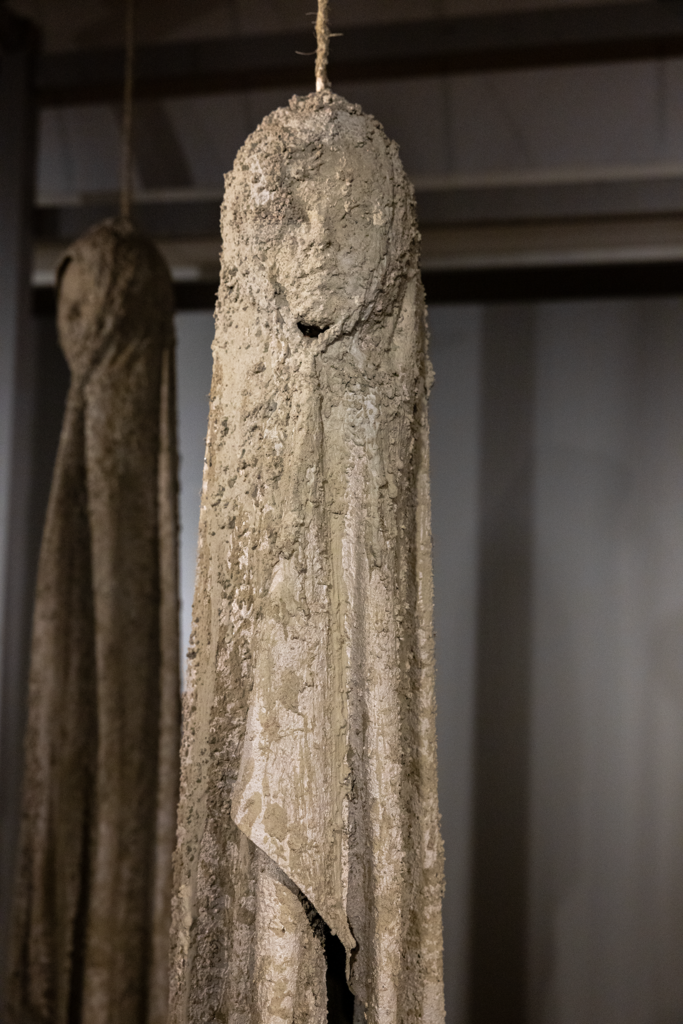
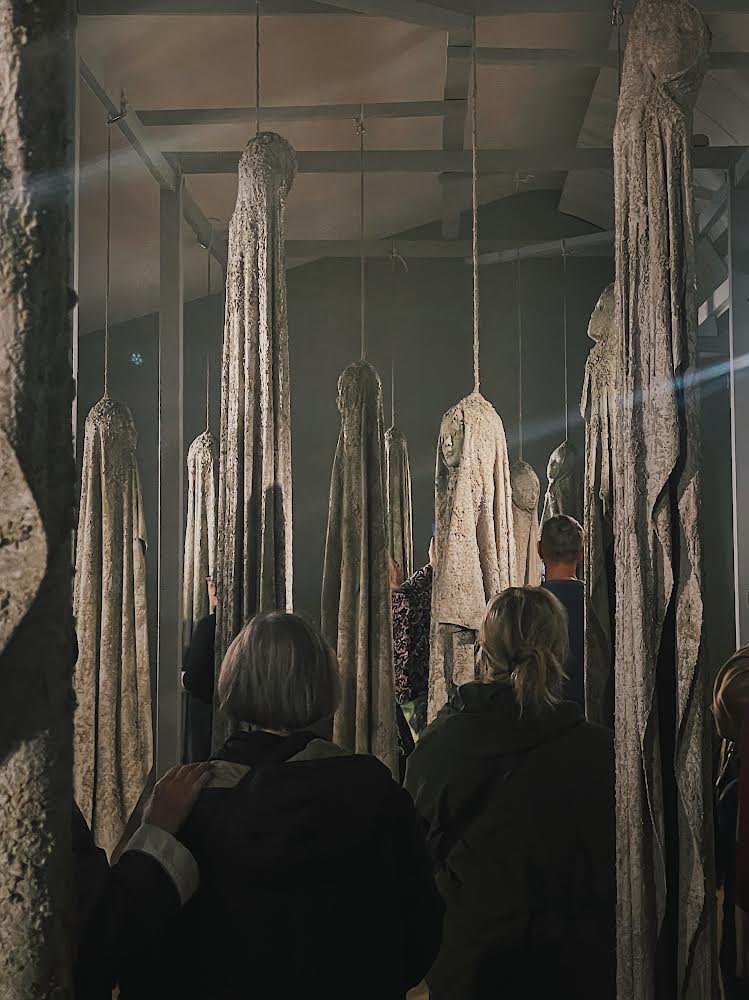
Photo: Lily Porfavor Boråskonstmuseum 2023 Sweden
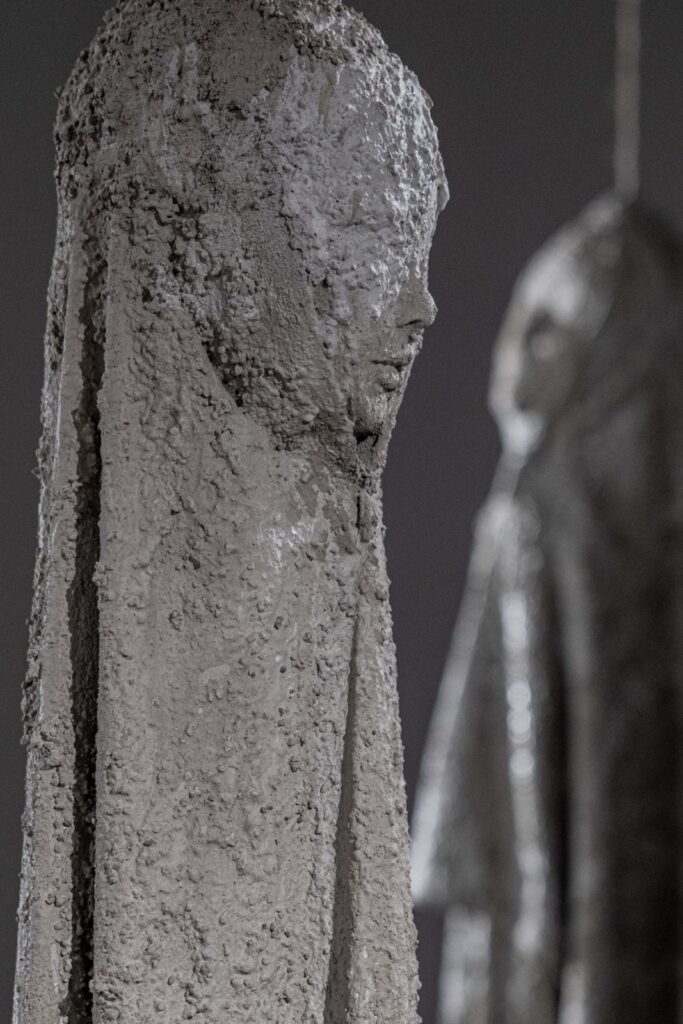
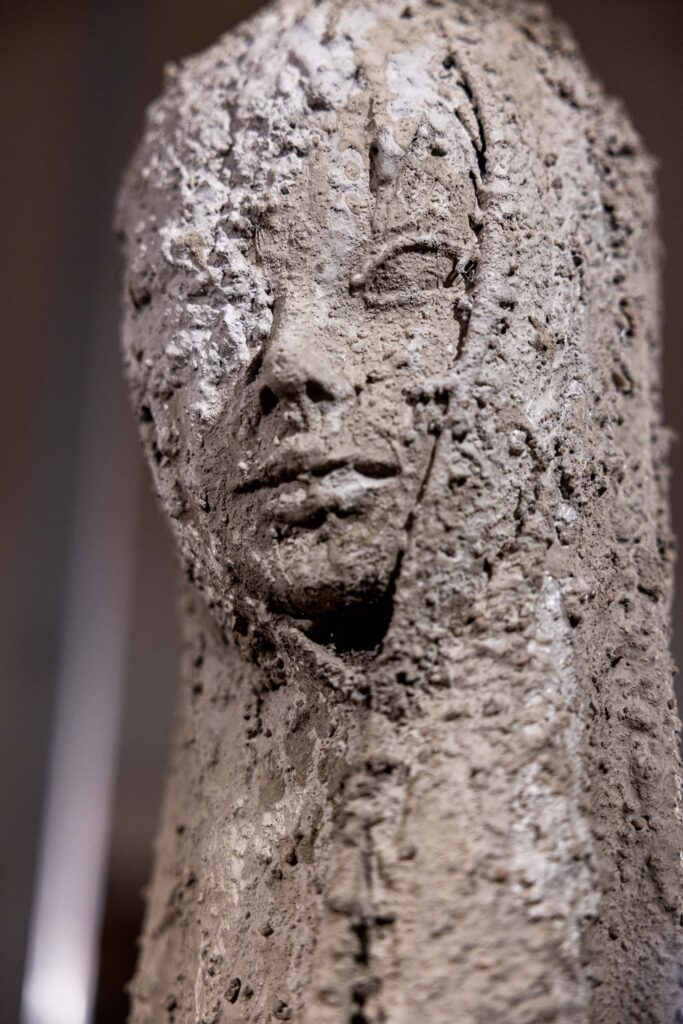
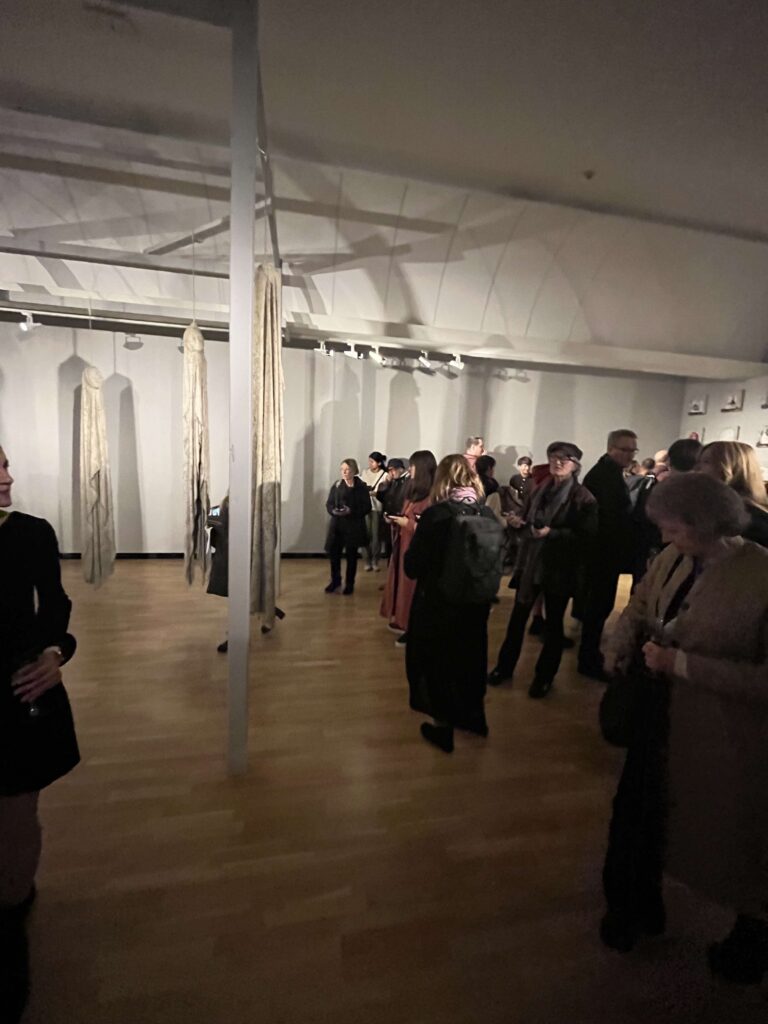
Photos are by: M.R. Heydary
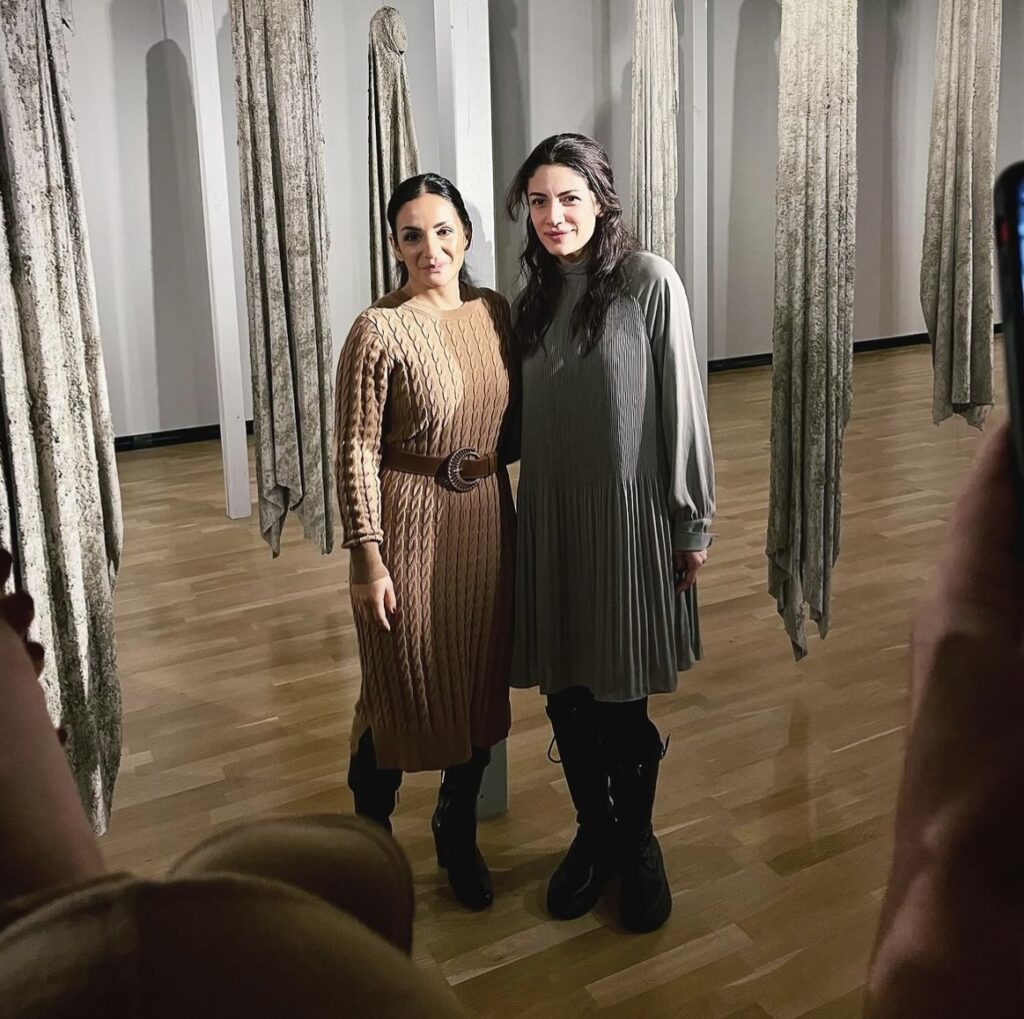
Parisa Lilieström Minister of Cultur
Borås Sweden
Photo: M.R.Heydary
2023
Press release about SETTING exhibition:
Basil G.Galloway
Chairman og La Maison Des Chapitres
Curator of Setting exhibition in France
A room full of hanging, concreted figures in chadors. They were ghostly, almost just a wisp of air. Visually, it took my breath away, and conceptually it connected deeply with everyone who saw it. I realised I was seeing a light speed evolution of her work- her first two shows in one year, and ‘Setting’ was just as well received. It was also very widely written about, and was incorporated into the upcoming show in her new Swedish hometown.
I can’t say strongly enough how proud I was to work with and support Sadaf and her poignant, personal work. It’s devastating simplicity, the theatricality of it, the minimalism, the power- I knew that something special was being made and the international reaction validated all of her effort and my faith. Fast forward to late summer and the current political environment in Sweden deteriorated, now characterised by unrest around Quran burnings and anti-immigrant sentiment. And things changed in Boras. Suddenly, ’Setting’ was too controversial to be shown in a public forum. The work, already commissioned and programmed, was canceled due to security concerns. The fear, according to the administration of Kulturhuset in Boras, was that this work would be seen as anti-islamic and inflame an already tense situation in Sweden between the muslim community and the rest of Sweden. If you actually see and understand Sadaf’s work, you understand that it is deeply personal, that it is about her experiences growing up and living under the rules of the Islamic Republic of Iran. It is a criticism of an autocratic regime and the politicisation of Islam in her home country. It’s about what it’s like to grow up, live, and work as a woman there.
In my view the role of art in society is to express and to question, to reframe ideas through different lenses and in different ways through various media. To harness an artist’s creative power to express something – be it an idea, a feeling, a concept – in a novel way. The function of security, where it might unfortunately be necessary, is to protect freedoms, including that of artistic expression.It’s shocking to me that a liberal democracy that values the role of free speech so highly would consider that security concerns arising from a misreading of an exhibit critical of tyranny and oppression would constitute grounds to censor it in the public square. It comes as even more of a shock that the work would be commissioned and scheduled, and then abruptly withdrawn. As a curator, it’s hard to fathom that you would consider the opinions of people who won’t even try to understand the work when you decide whether or not to show it. As Sadaf has said, this is reminiscent more of what one would expect in Iran than in Sweden.
As much of a shock and a disappointment as this has been for Sadaf, it is with a sense of both vindication and gratitude that we have received a wave of support and offers for new venues to showcase this important and viscerally touching work, as well as a huge new swell of press coverage around this topic which is both deeply personal to her and relevant to the freedom of so many other people today. It continues to be with great pride that I support Sadaf Ahmadi, her work, and the freedom to show work critical of power and in support of human rights.


Photos: M.R.Heydary
Boråskonstmuseume 2023 Sweden