LIMINAL

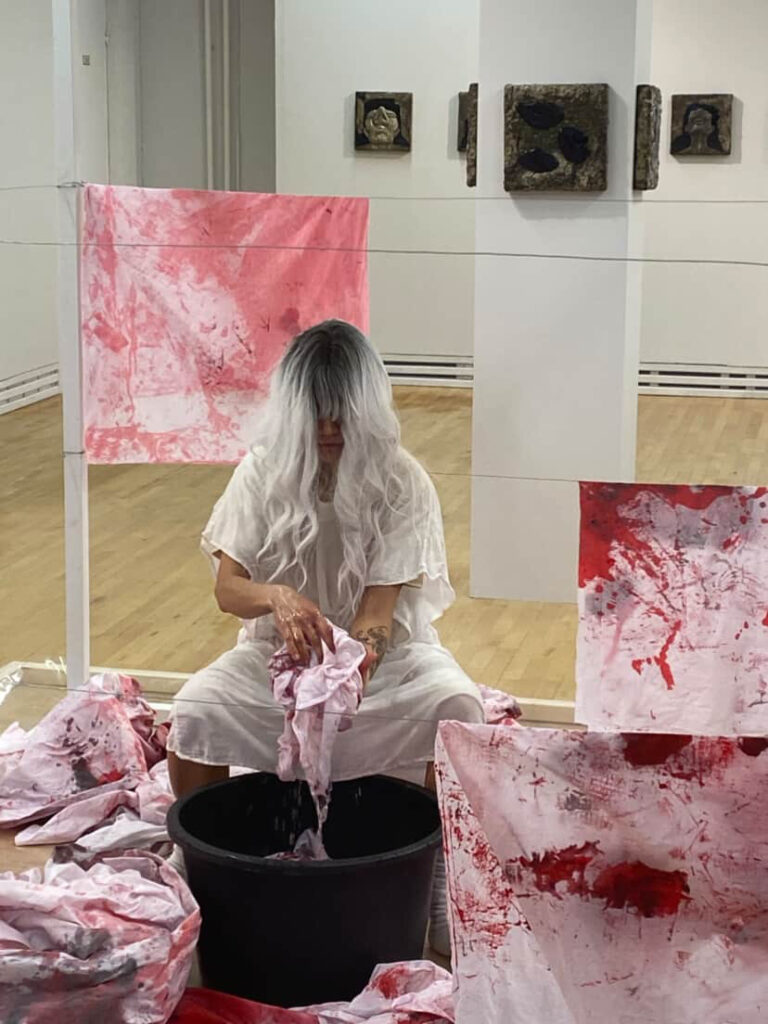
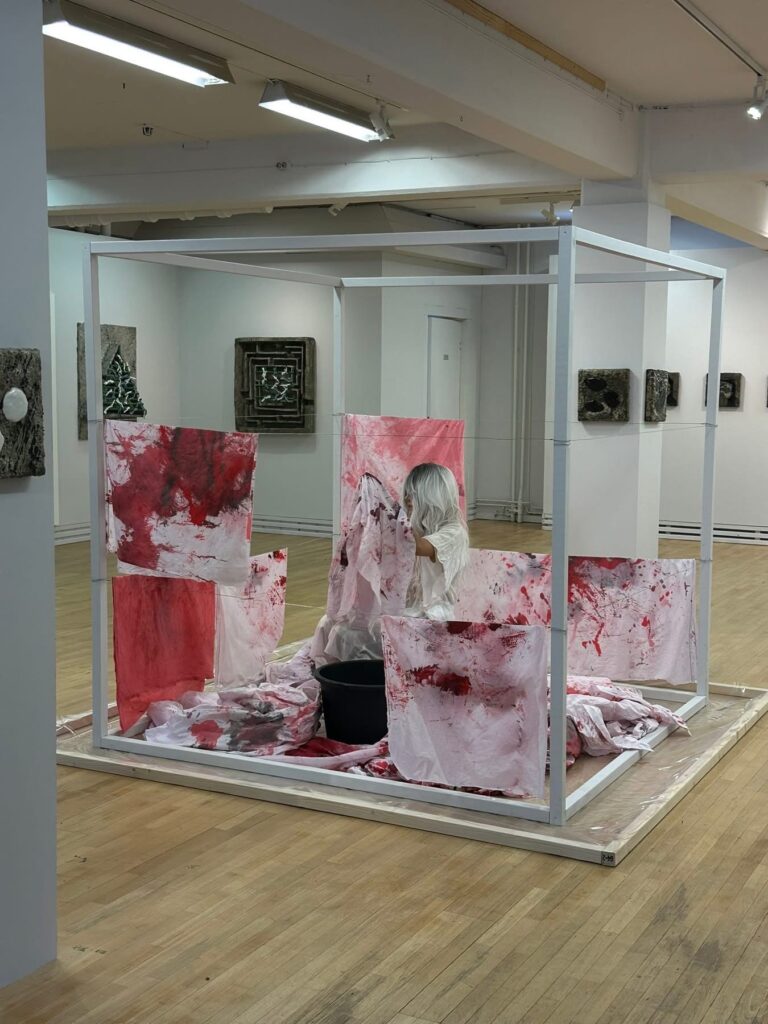
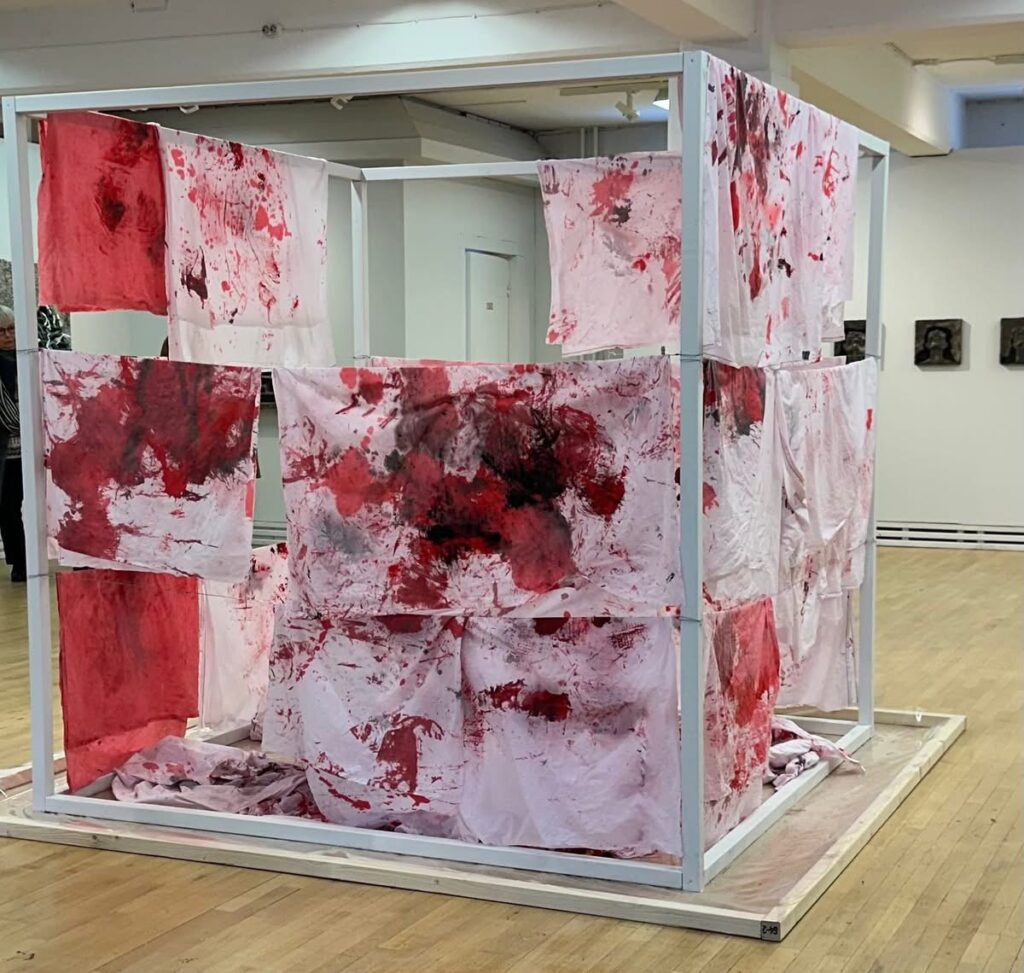
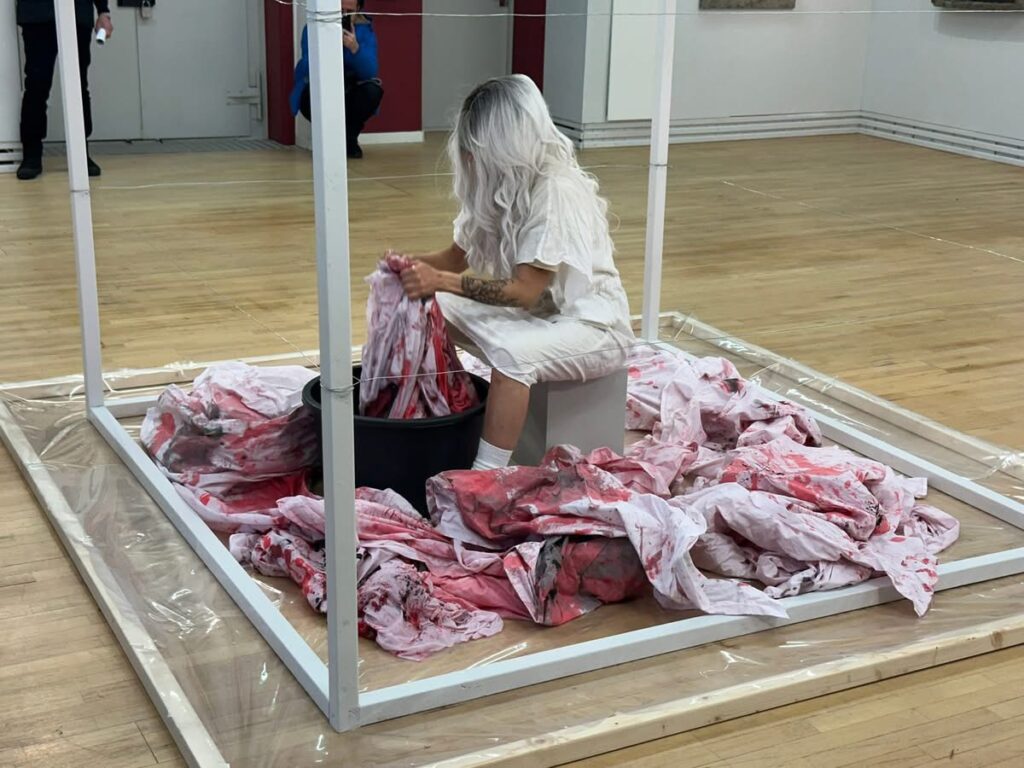
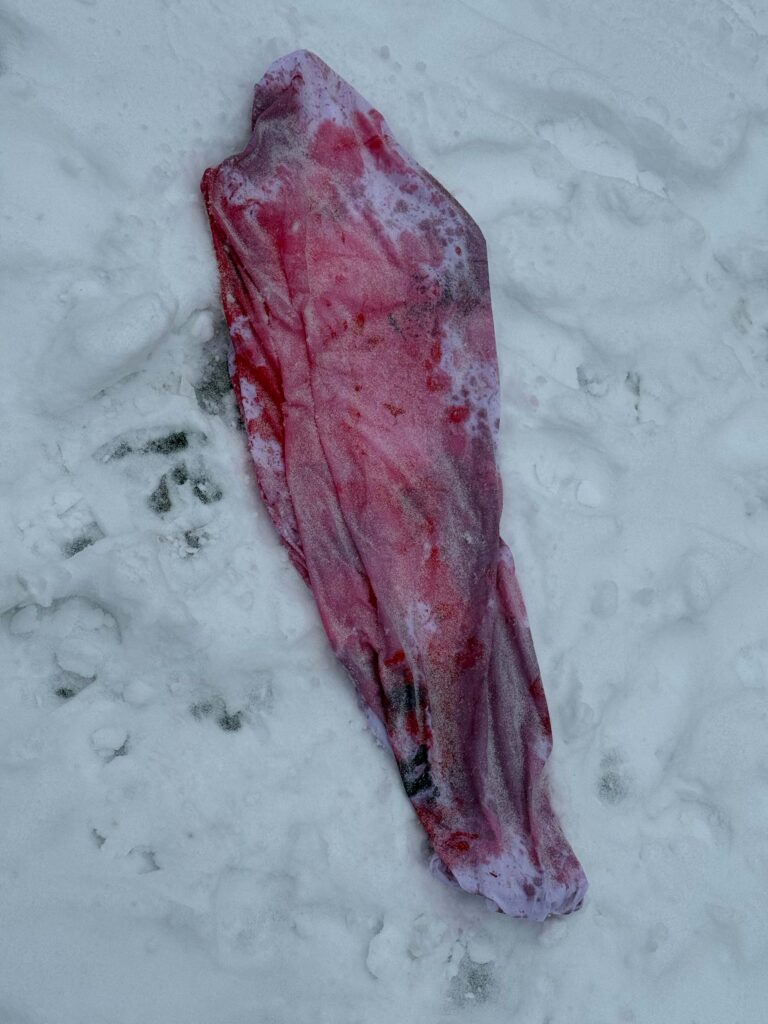
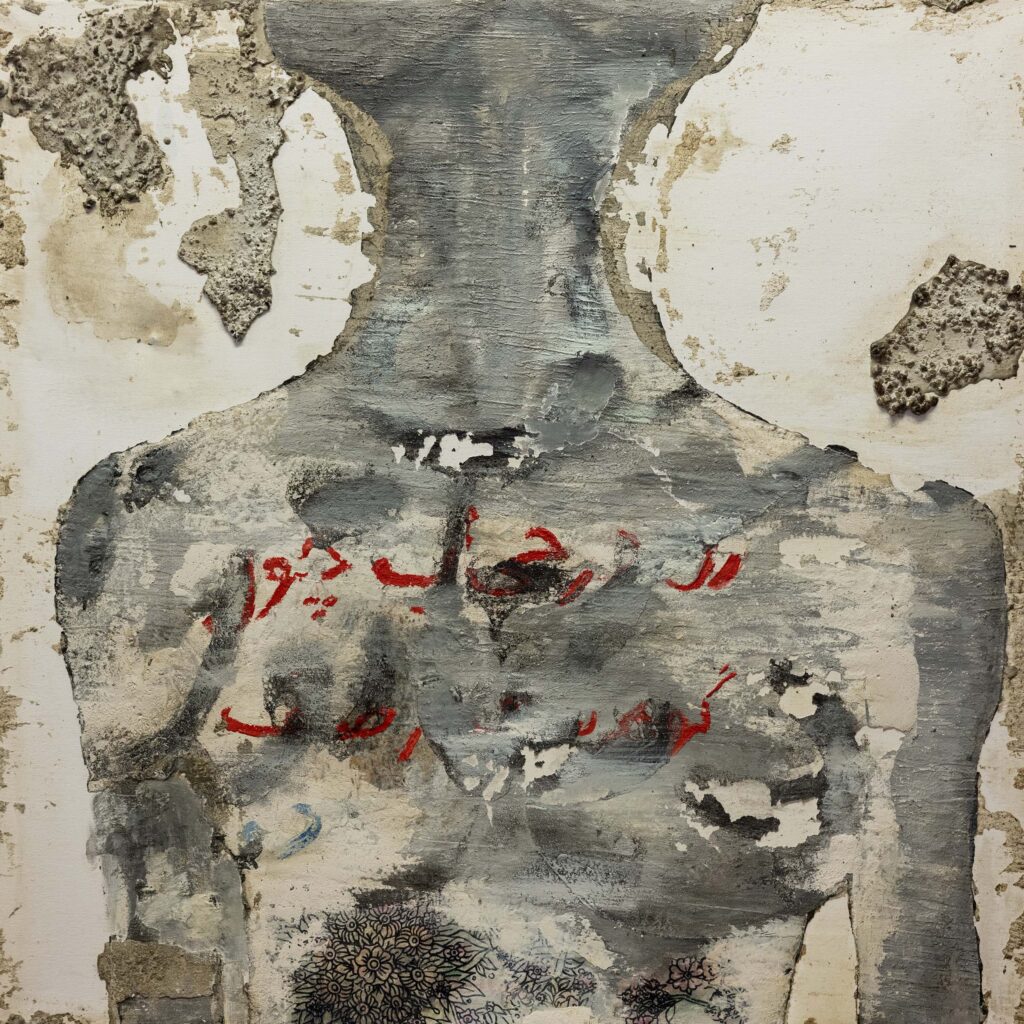
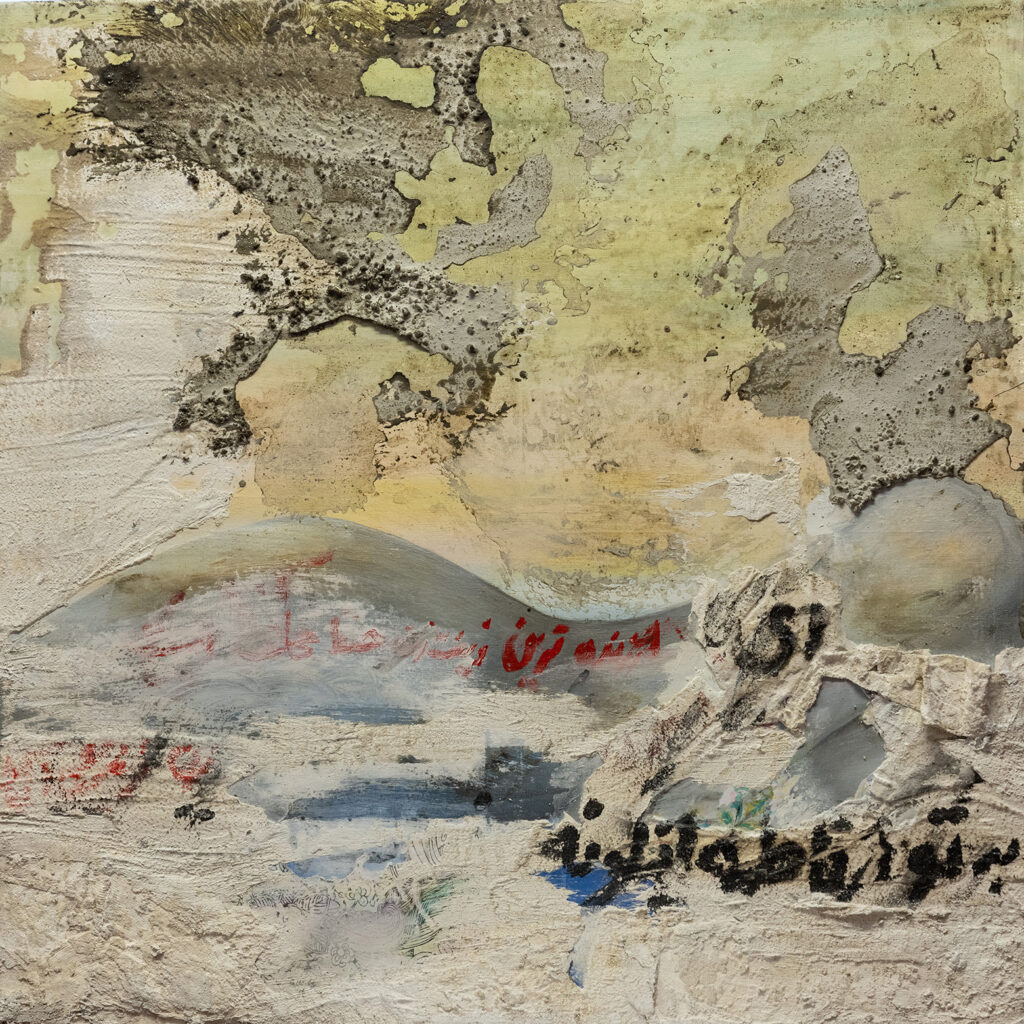
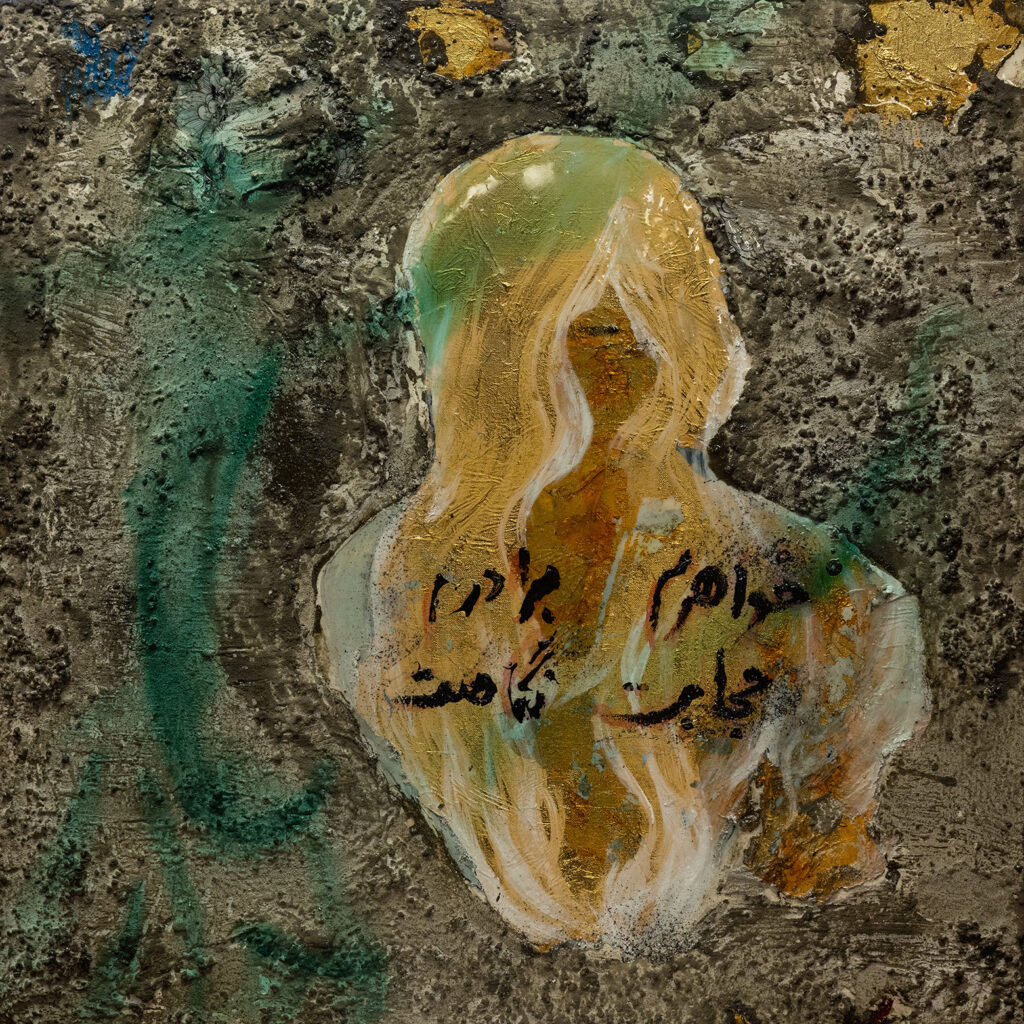
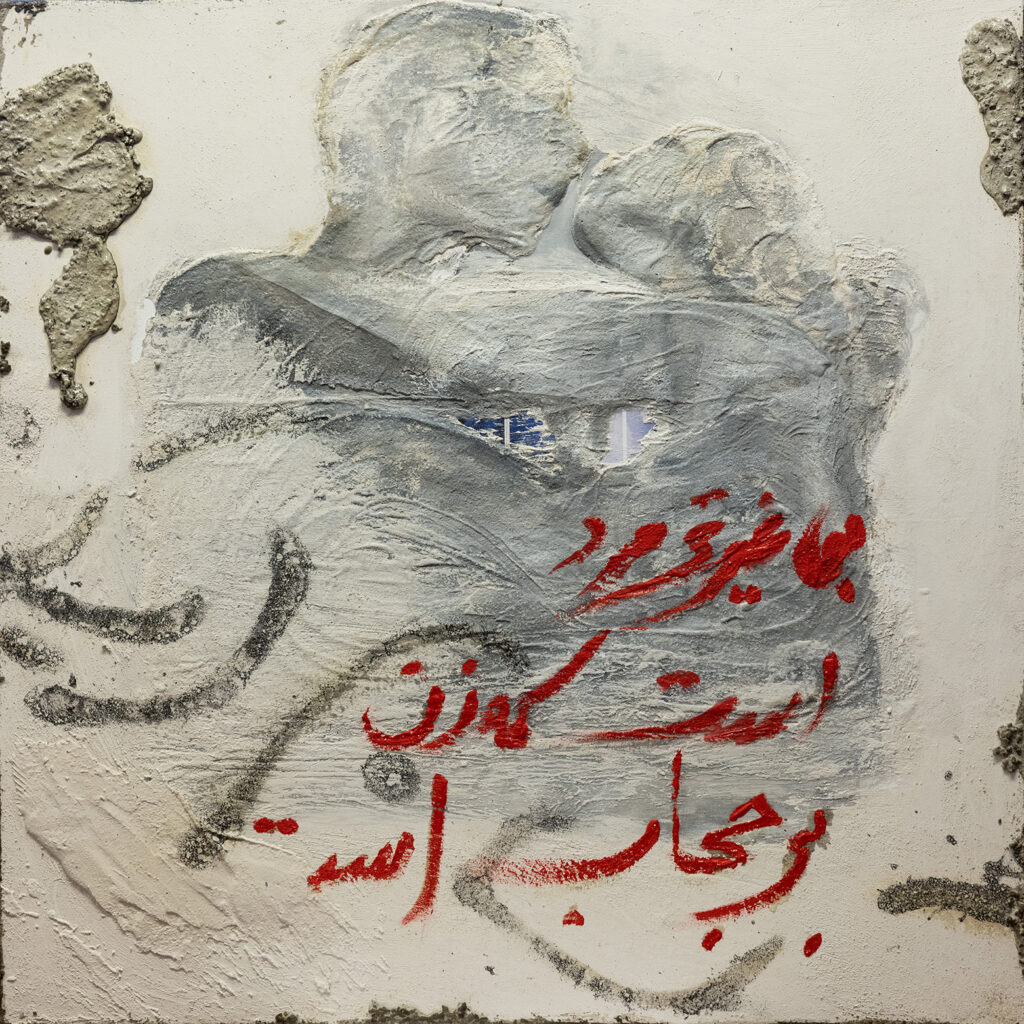
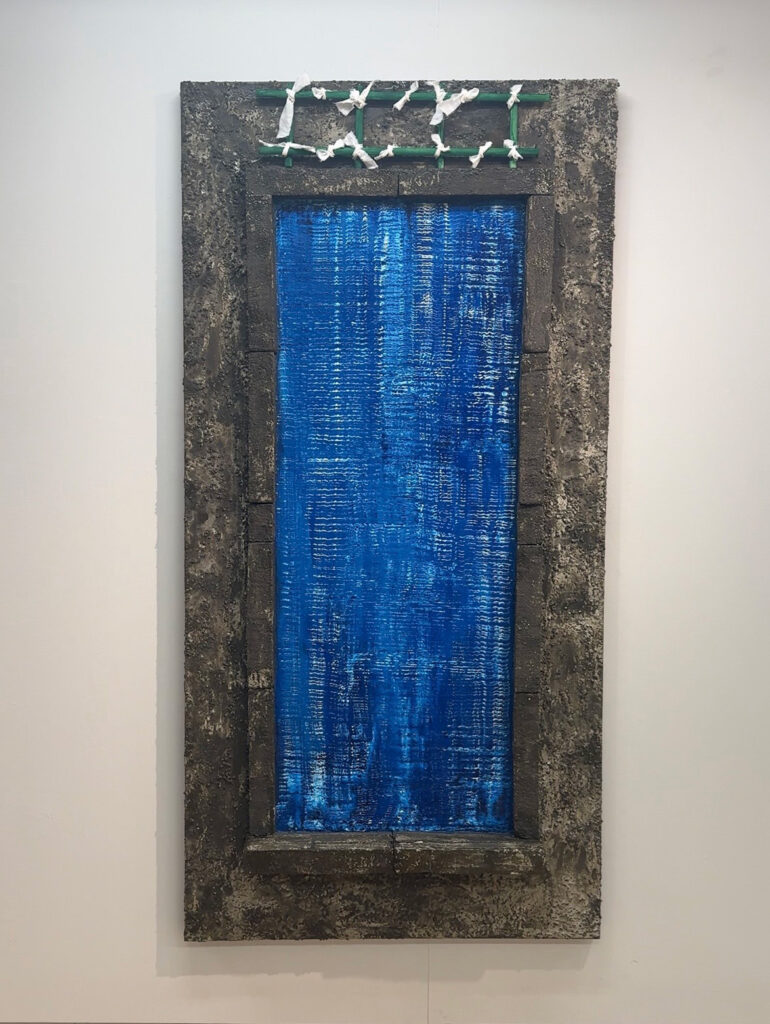
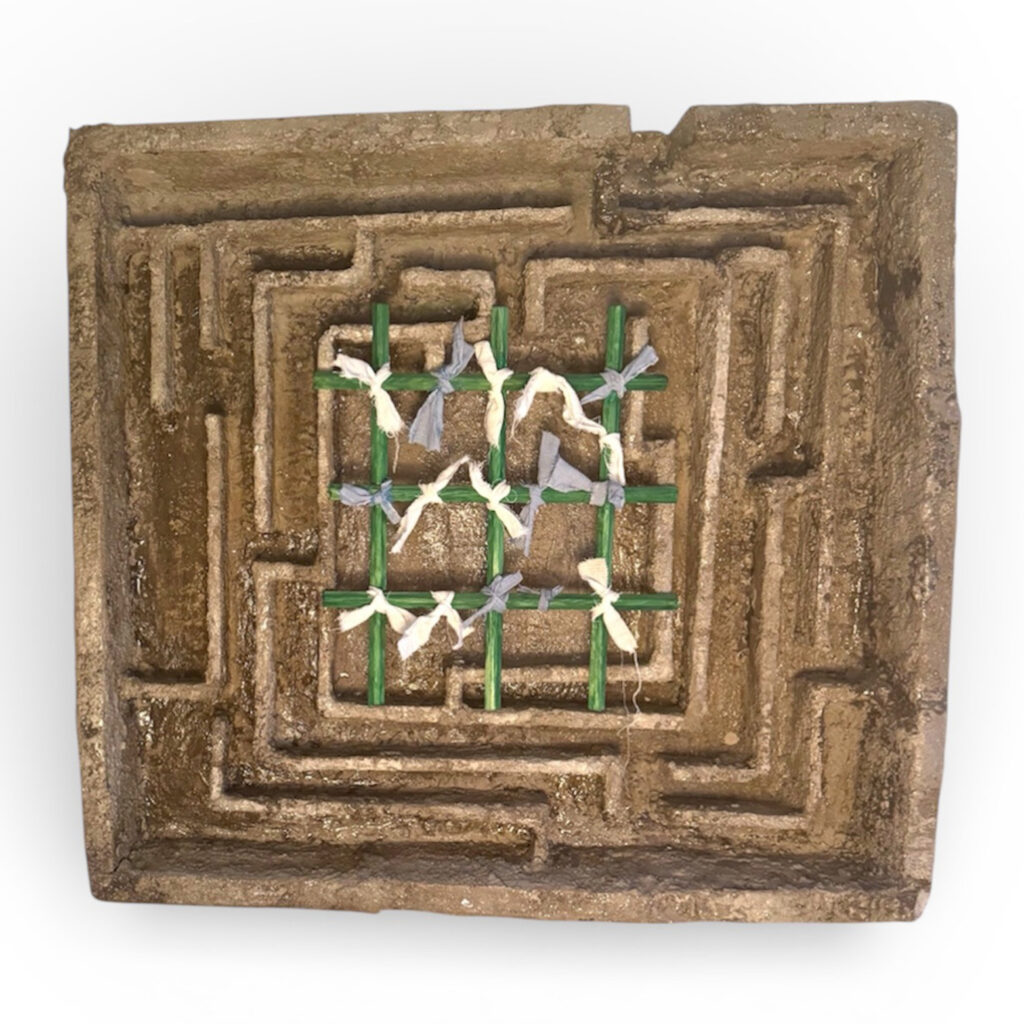
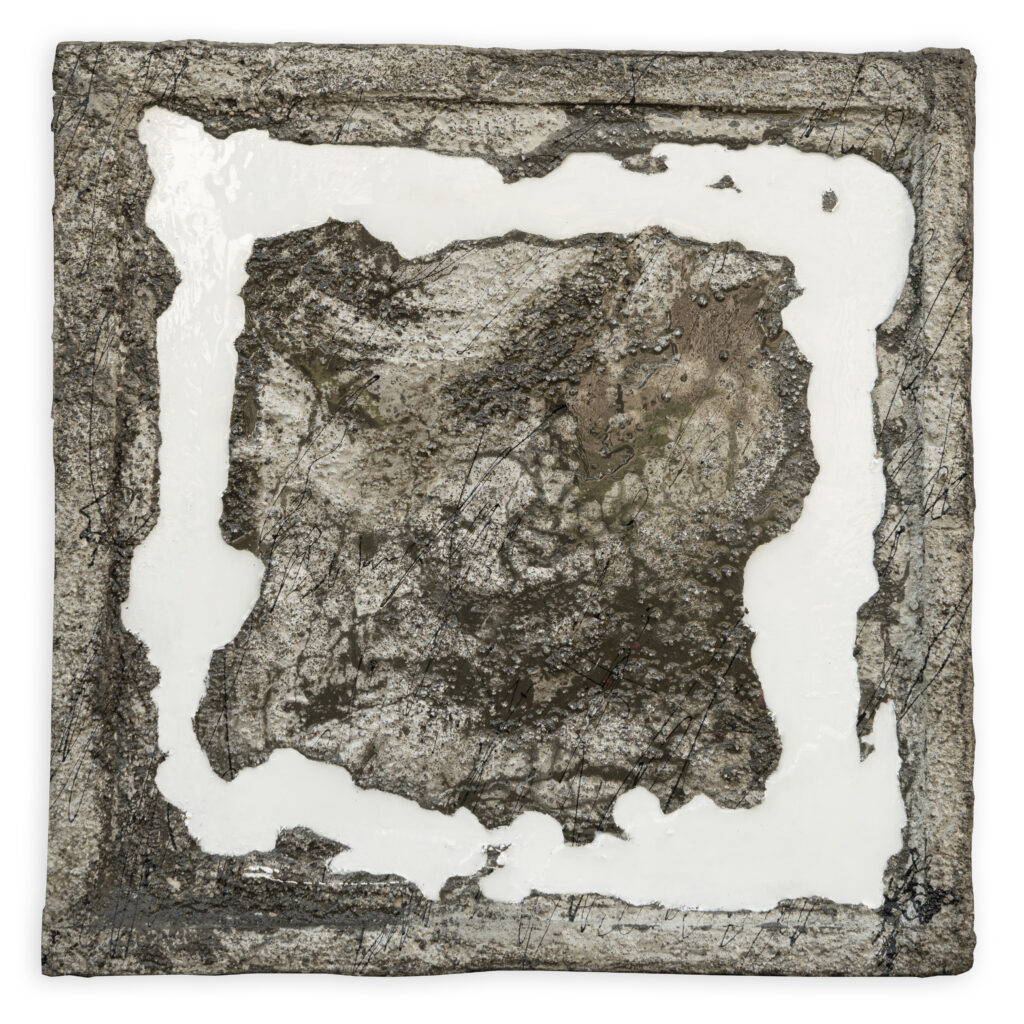
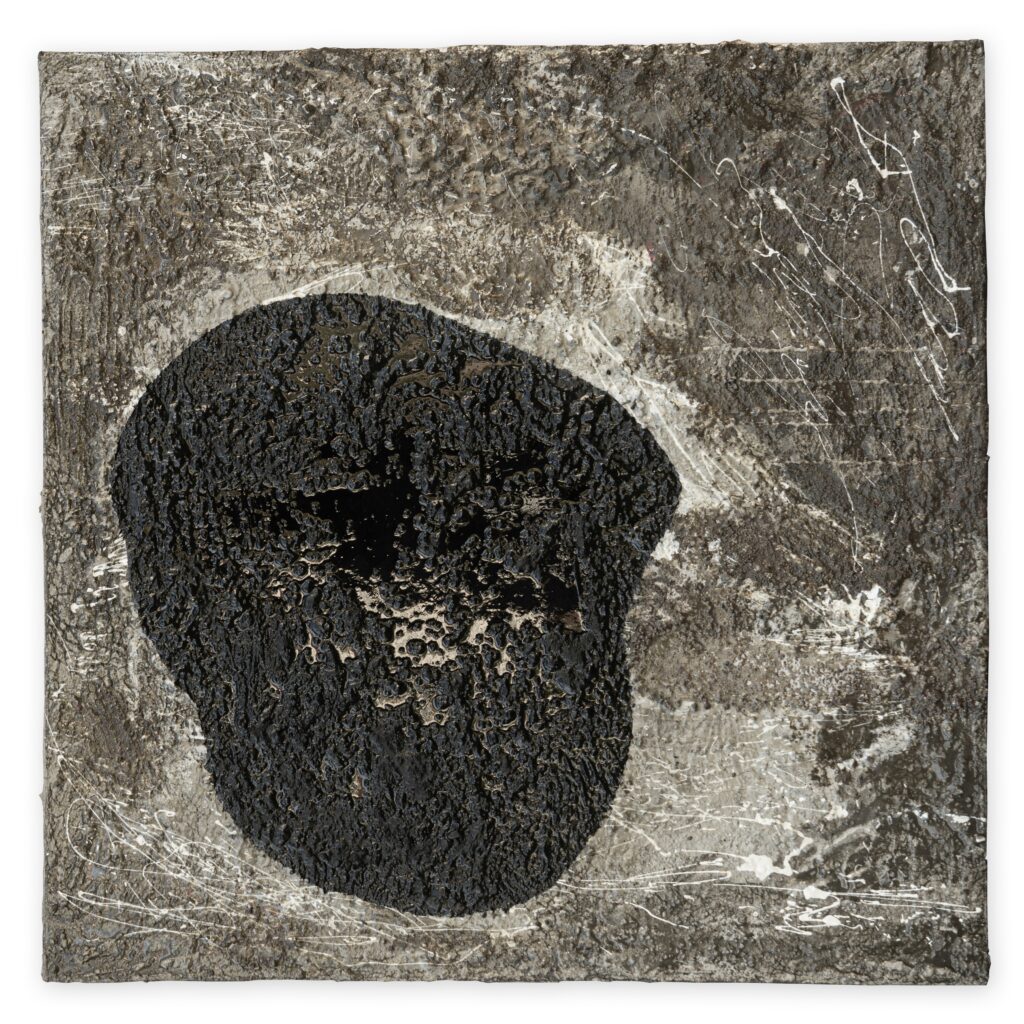
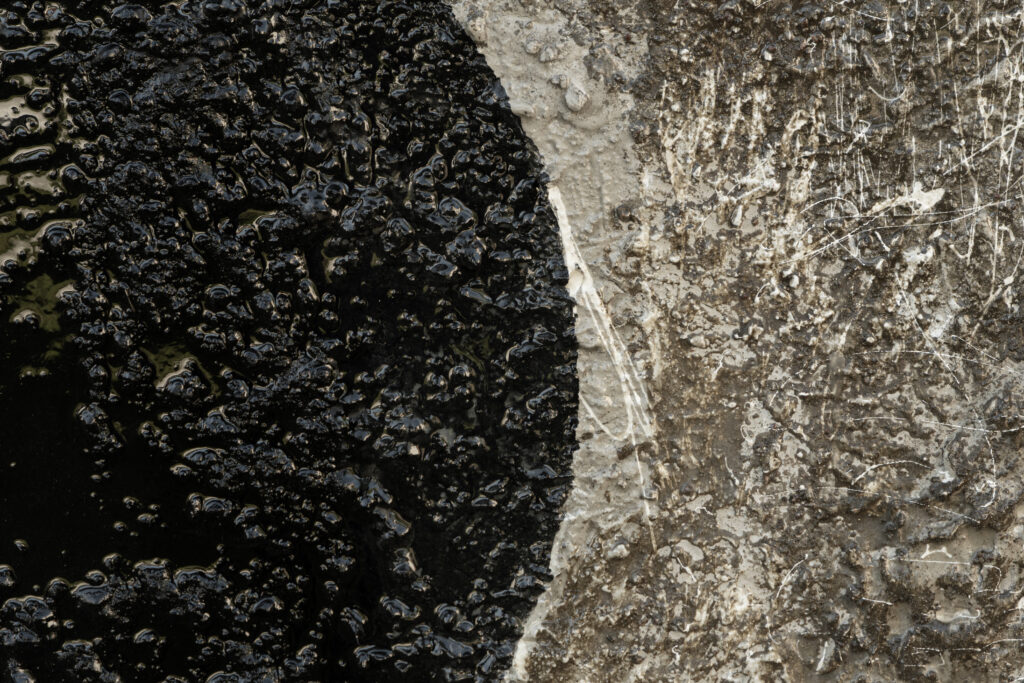
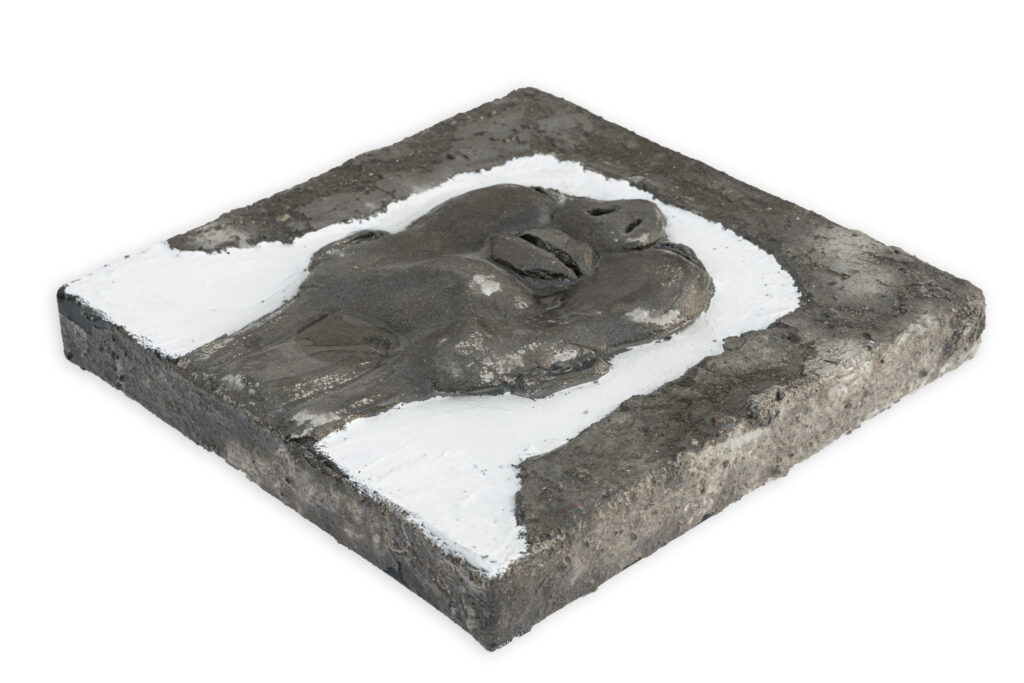
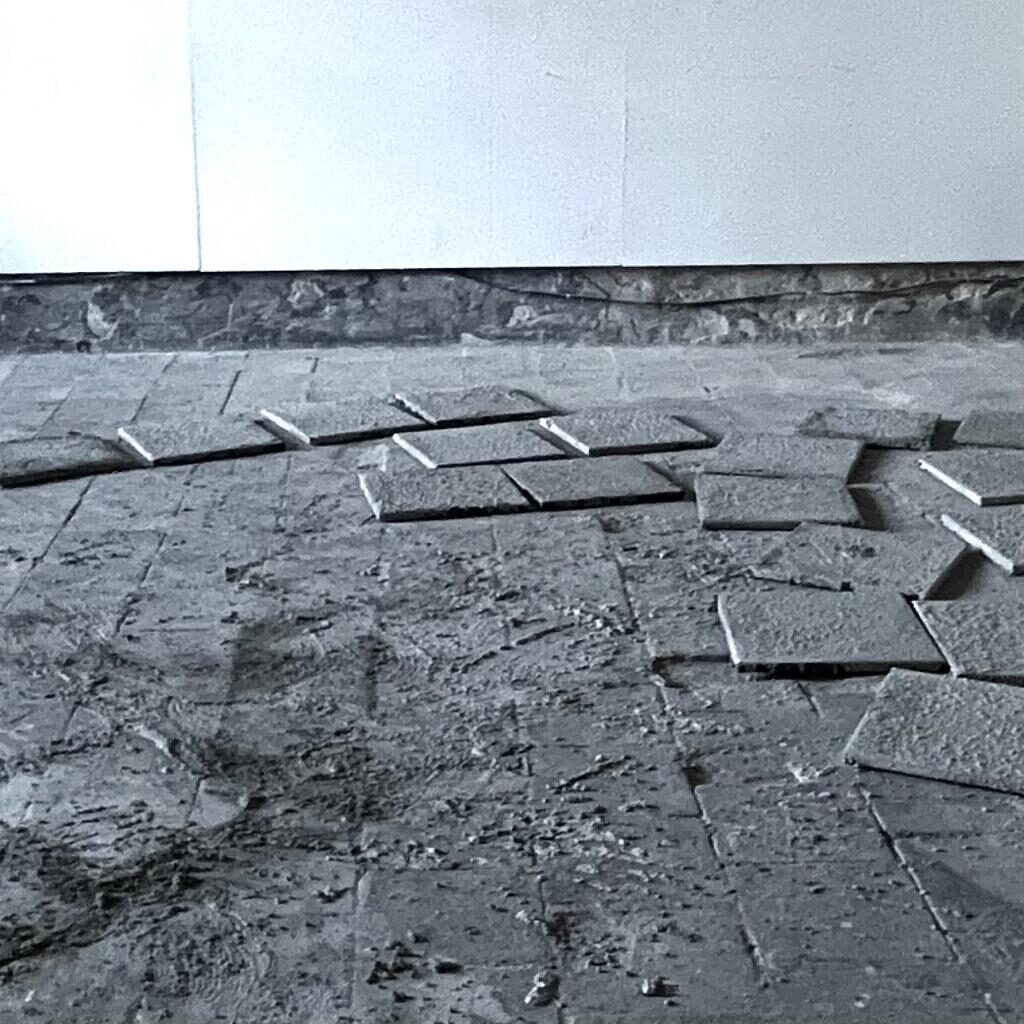
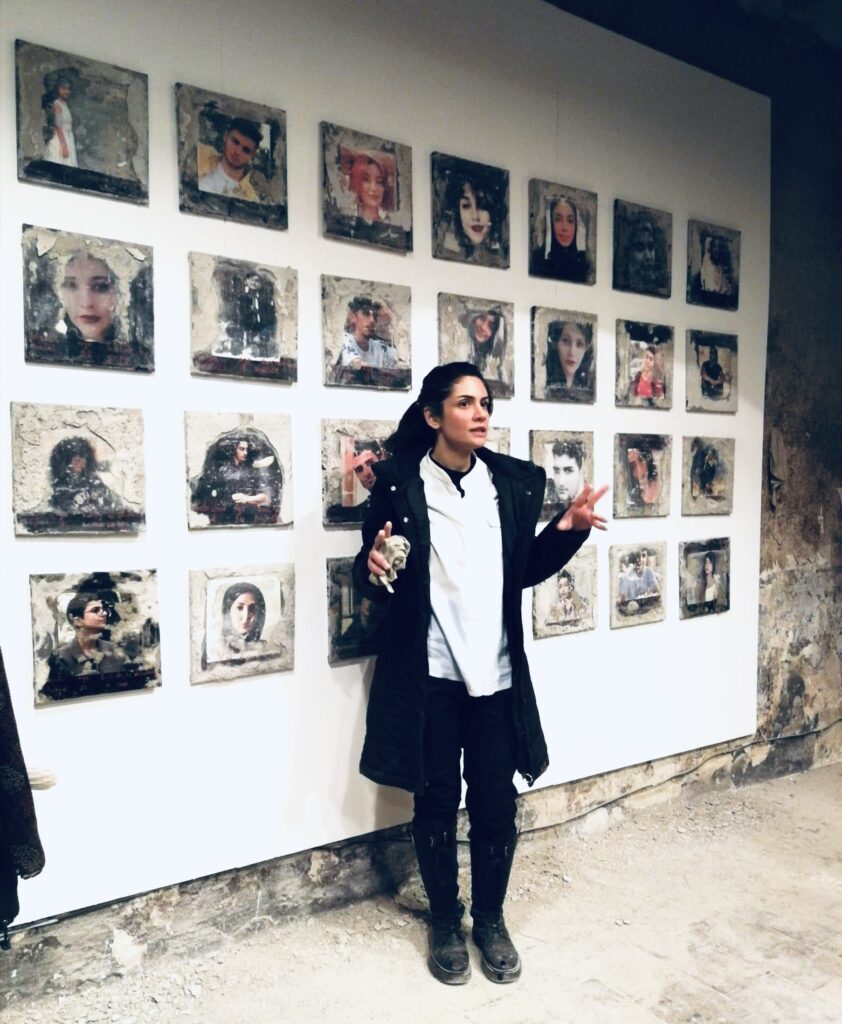
The concrete walls are addressing the historical approach on walls in Iran, which once held vibrant paintings carvings and statues of women but have been systematically covered or destroyed by Islamic beliefs over time.

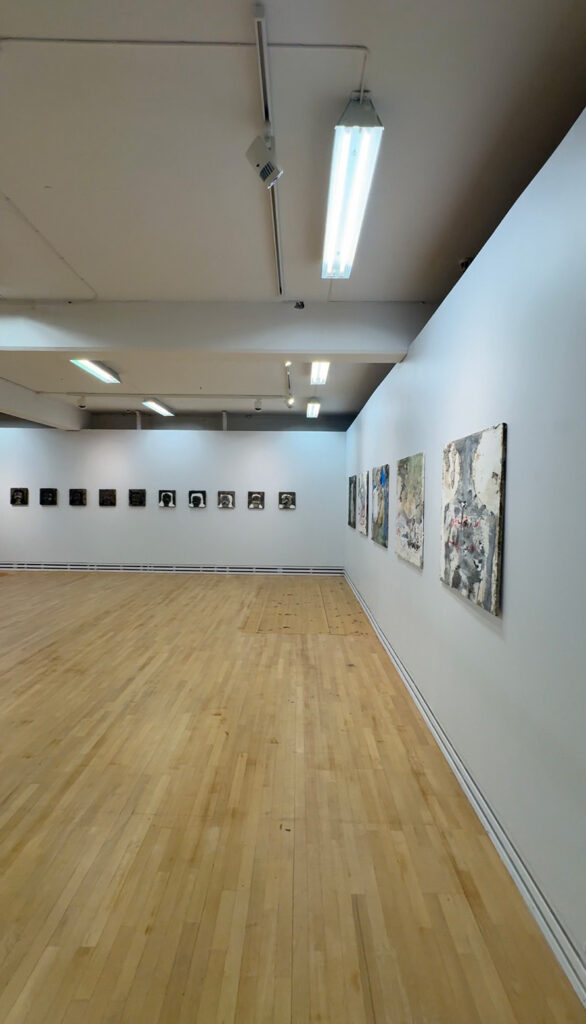
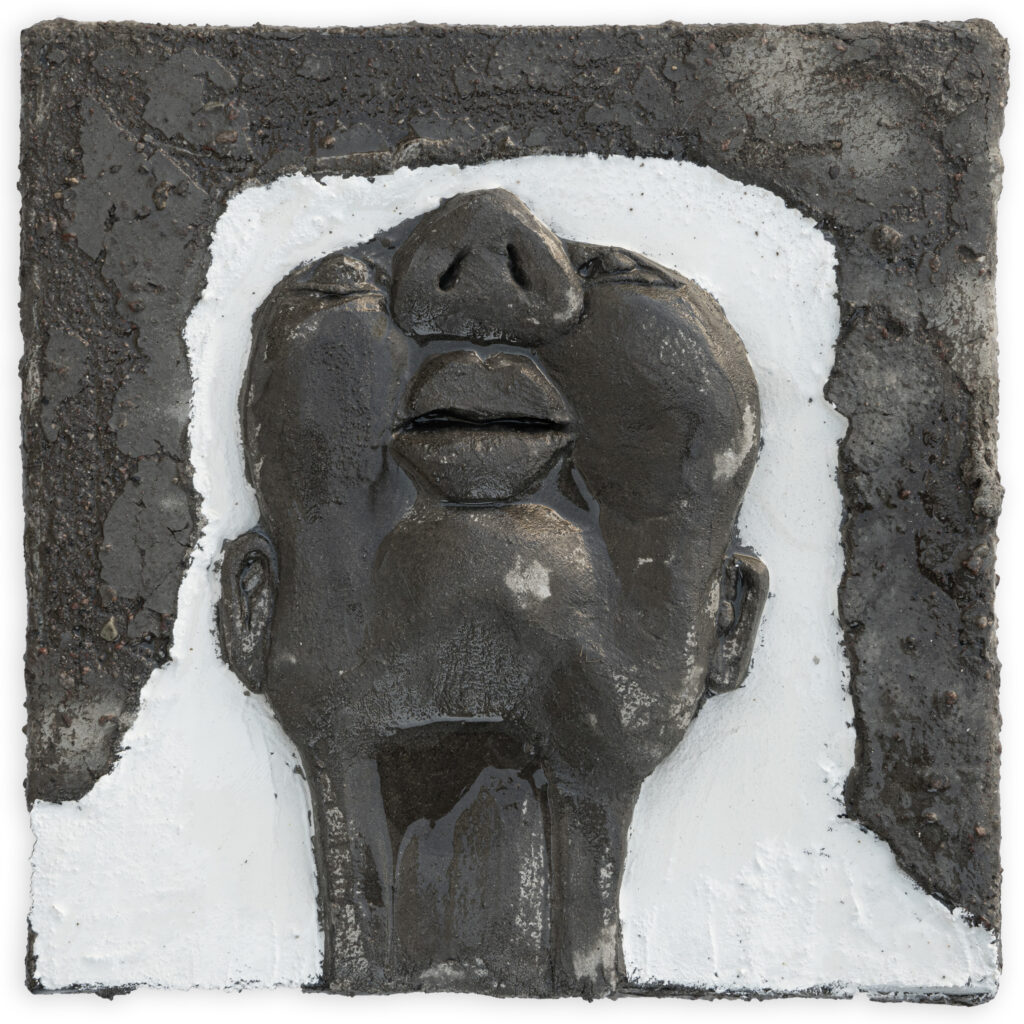
By layering different materials and textures, my work not only symbolises these layers of hidden and erased history but also physically embodies the resilience and ongoing struggle of Iranian women to reclaim their rightful place in society.” “In this installation, I’ve also created smaller, featureless faces that have no hair, gender, or distinct human characteristics, yet are clearly human. These figures all look upward, conveying a sense of an overwhelming power above them that influences their existence. That’s why the wall in my installation is placed above these faces, symbolising the historical and oppressive forces that loom over them. The walls, layered with history, are painted in white and black, signifying perfection in ideology which holds them in a liminal space like the womb. This represents the diminishing role of women through history and how it affects even the unborn, who are influenced by the ideologies imposed on their mothers. These ideologies dictate everything from how the mothers live to the future identity of the child, who, even before birth, is predetermined to follow a prescribed path. Thus, these faces looking up reflect the weight of historical and societal pressures that have long dictated their existence”.

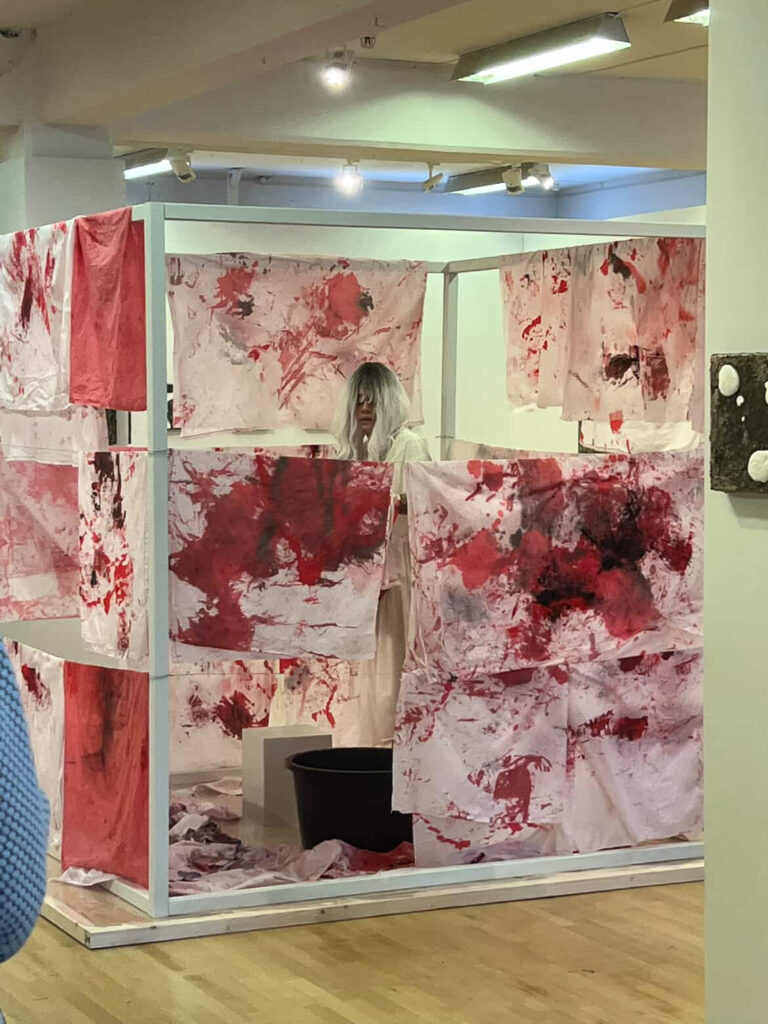
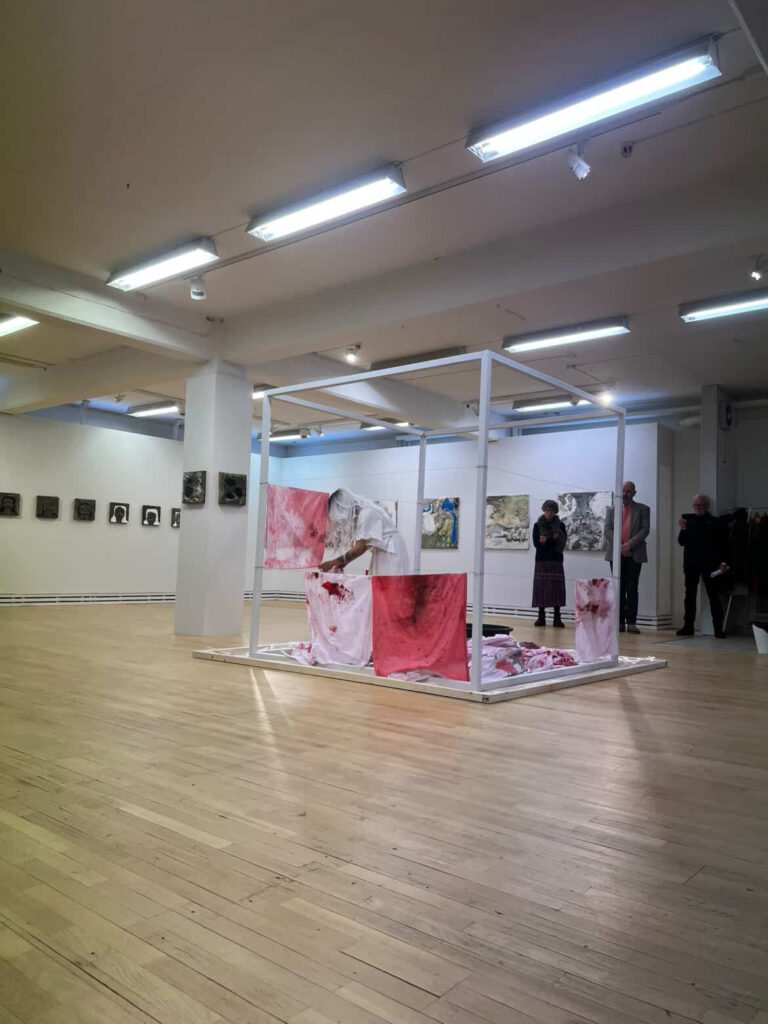
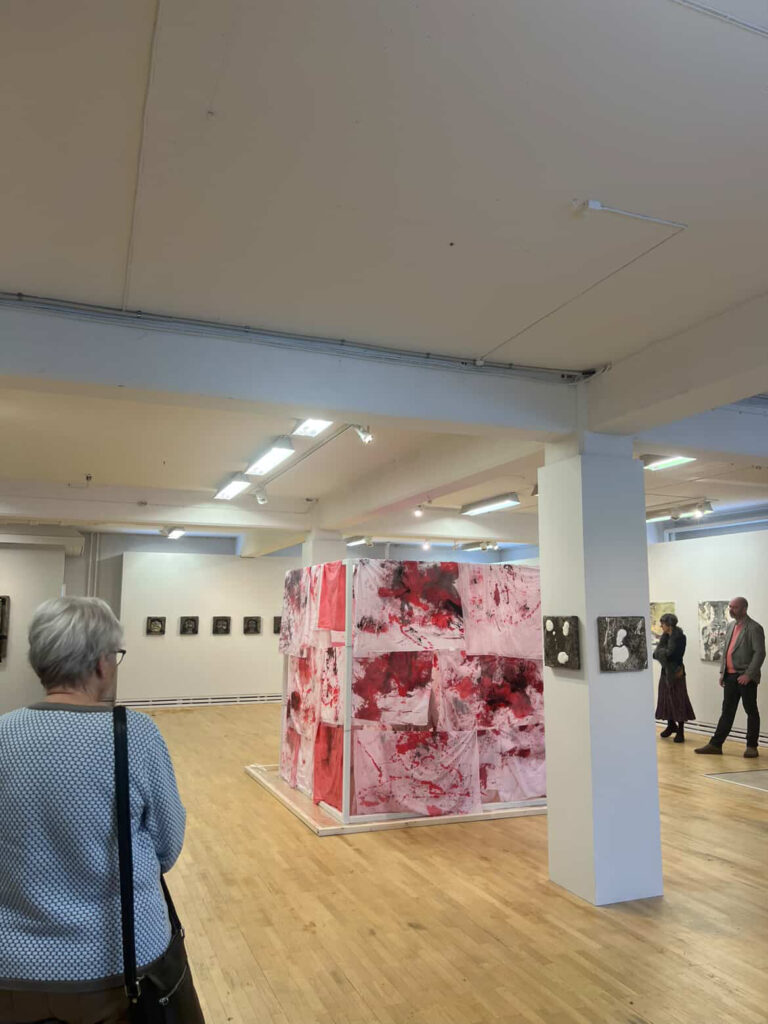
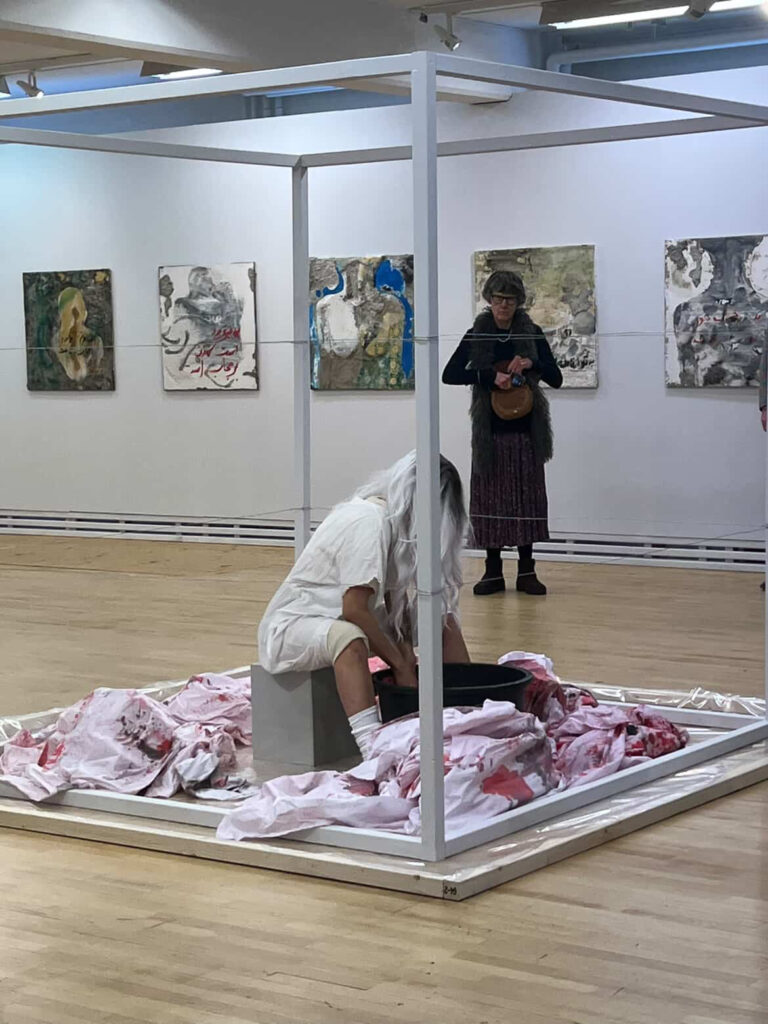
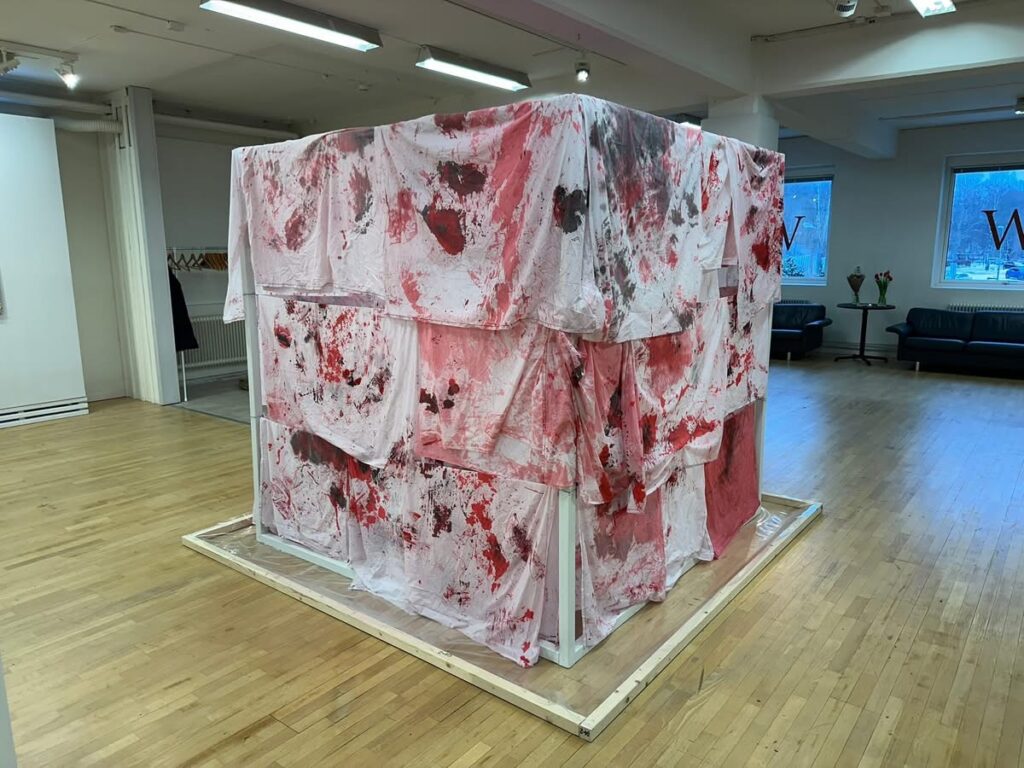
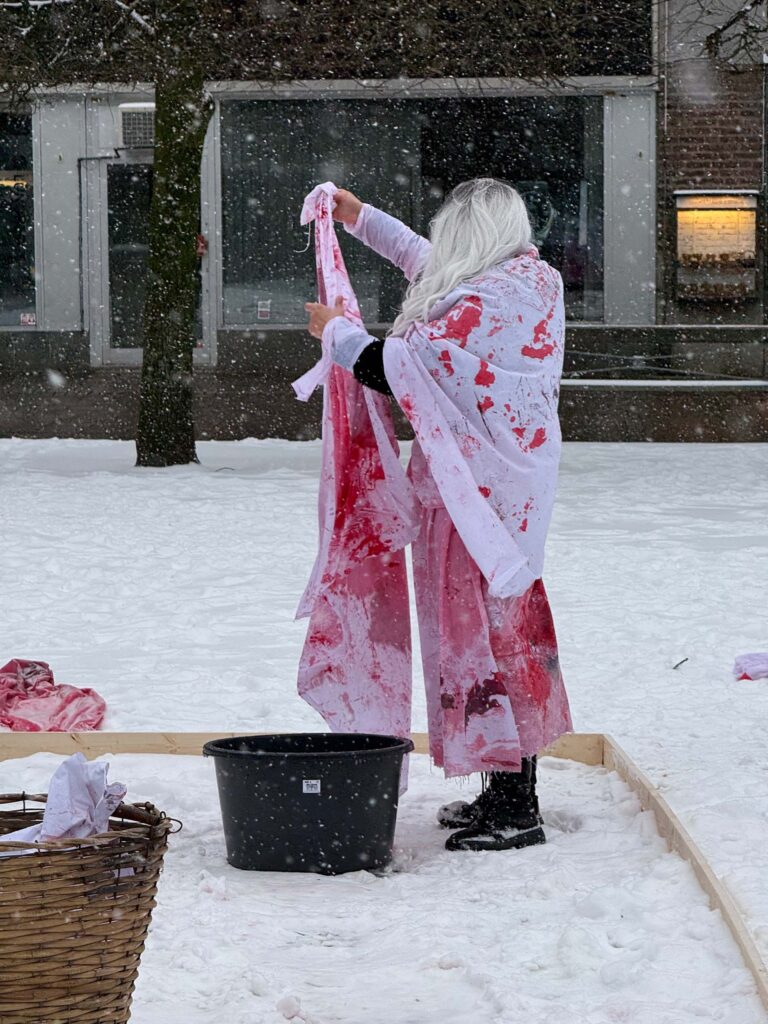
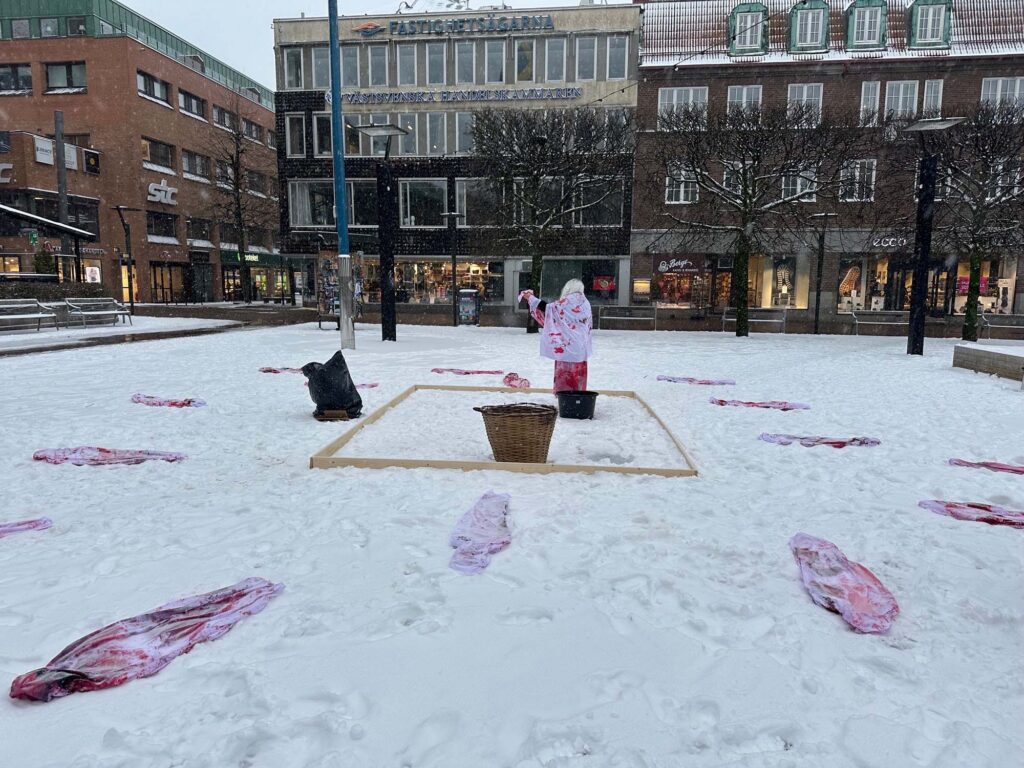
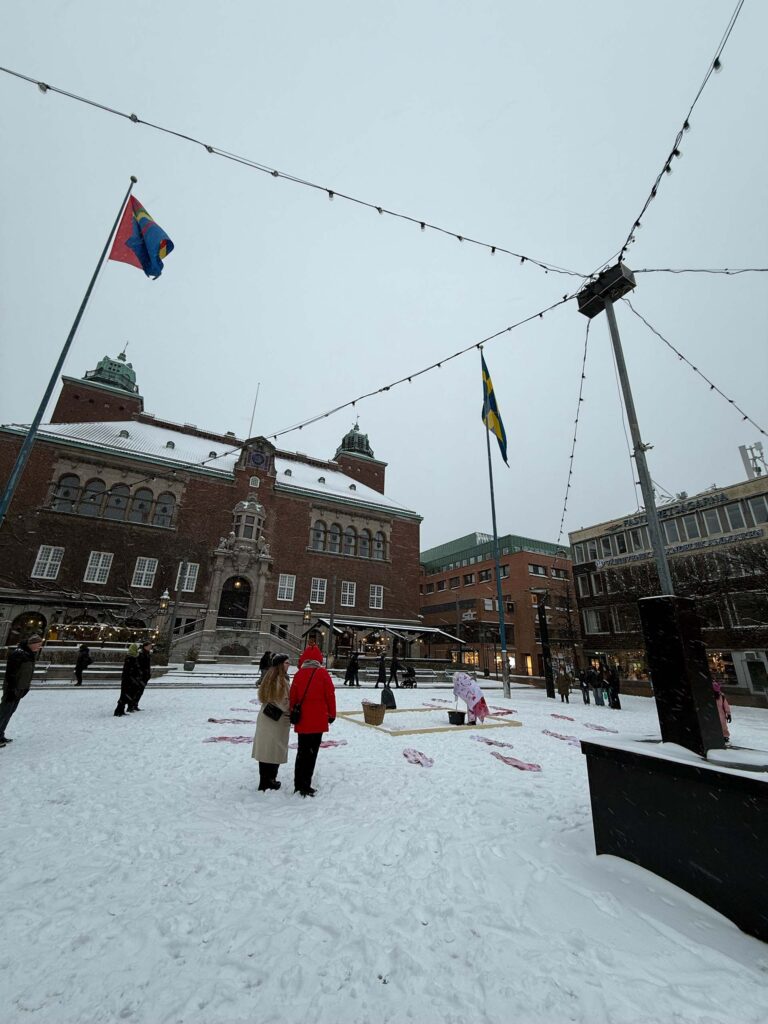
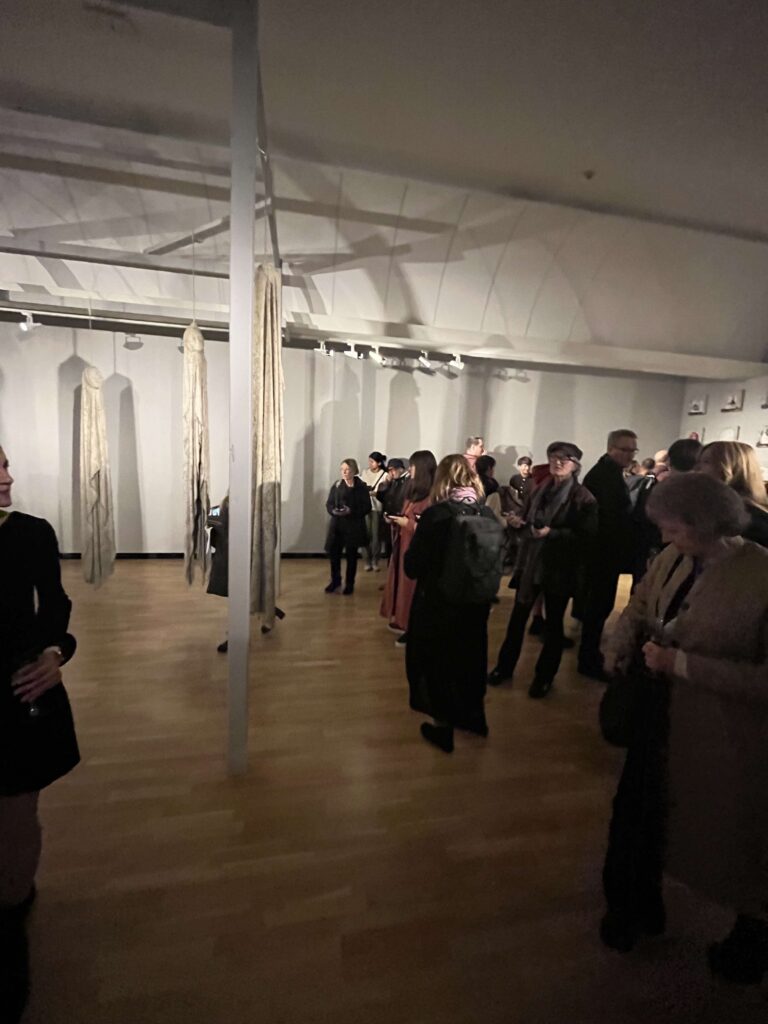
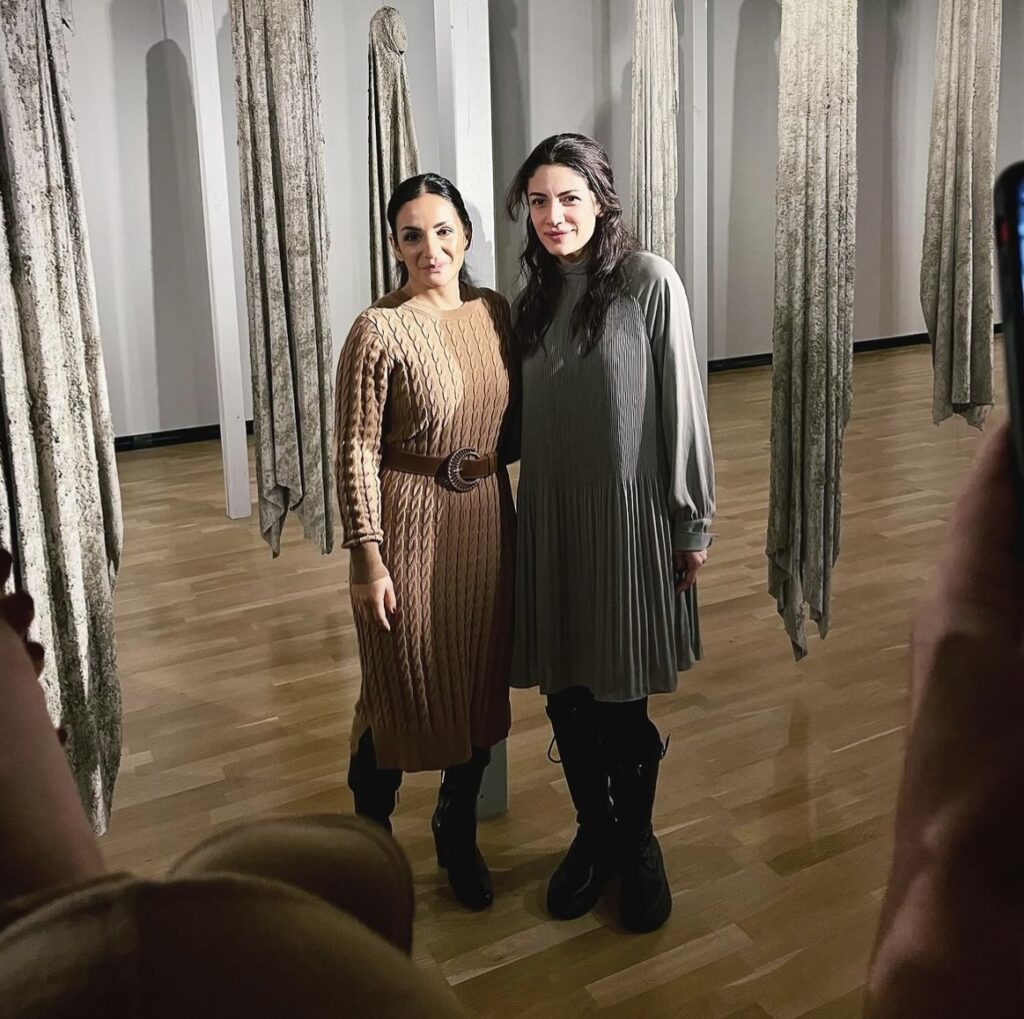
LIMINAL - STOCKHOLM, 2025

LIMINAL - WÄRENSTAMS BORÅS, 2025

What happened to the censured exhibition? 


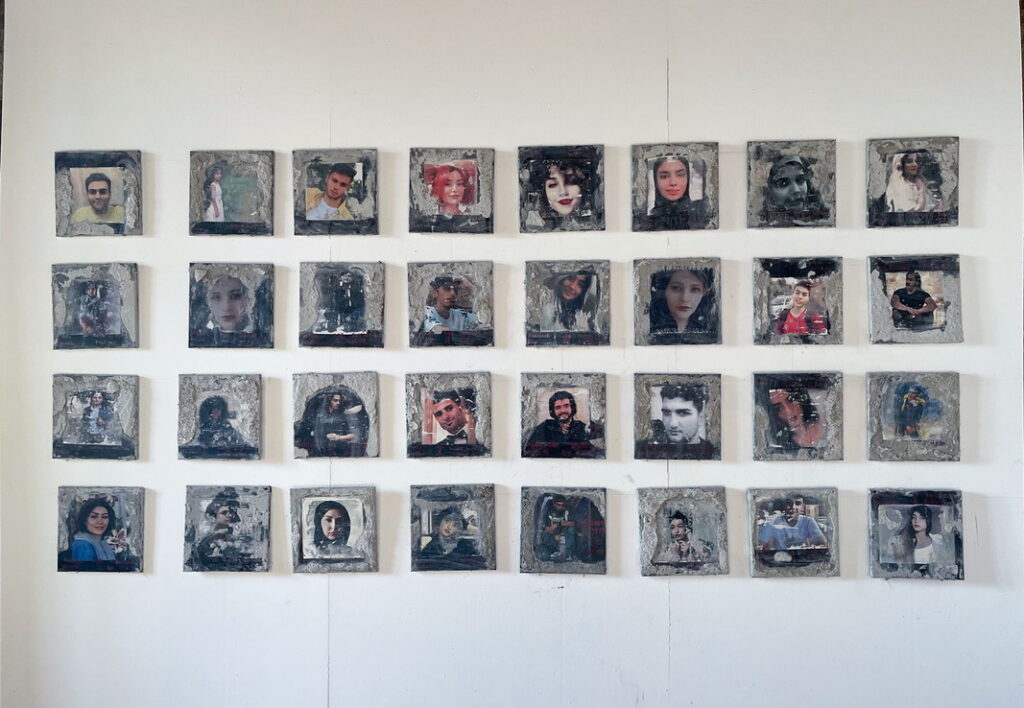
The Concrete project,is a collection of installation performance art and documented footages from instagram direct posts‚ which shows a chronological timeline of uprising in Iran

woman life freedom

LMDC Concrete
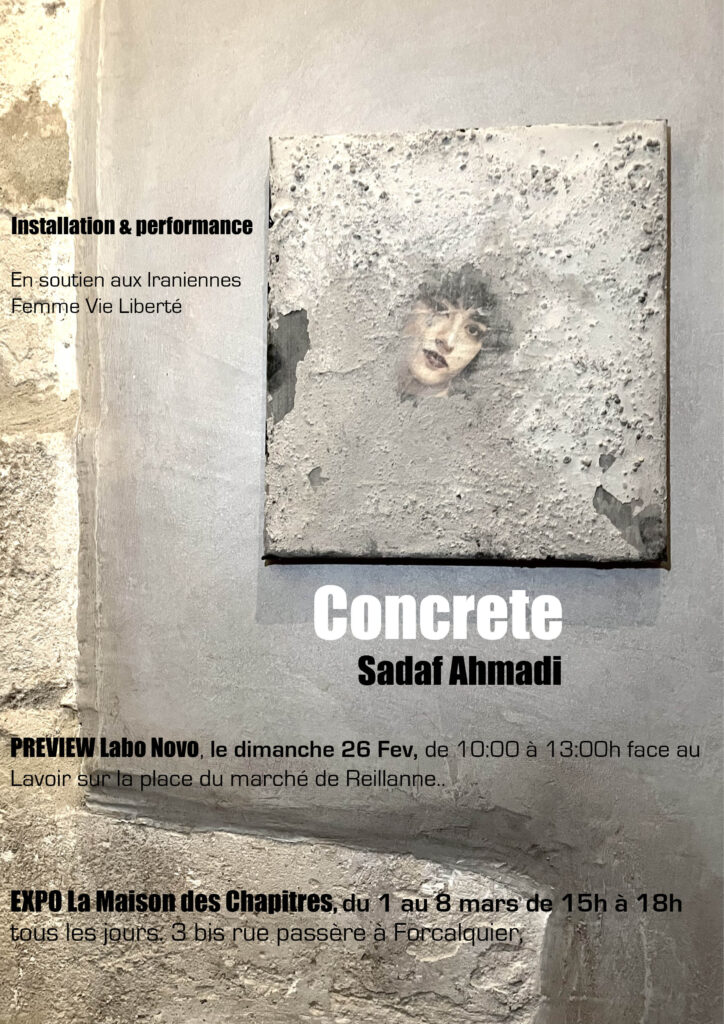
CONCRETE

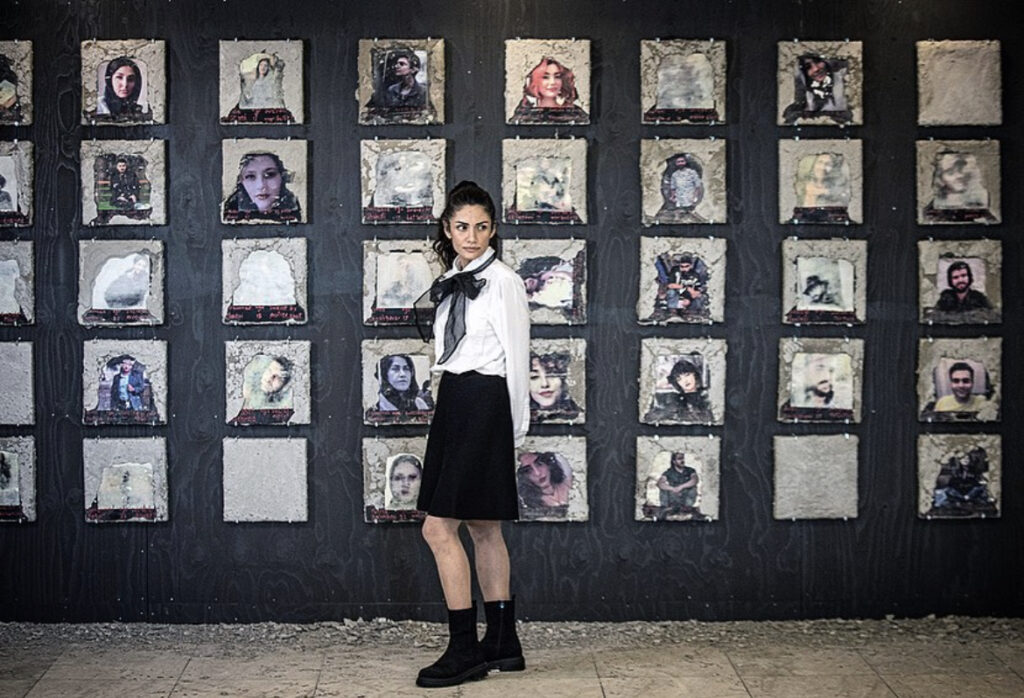
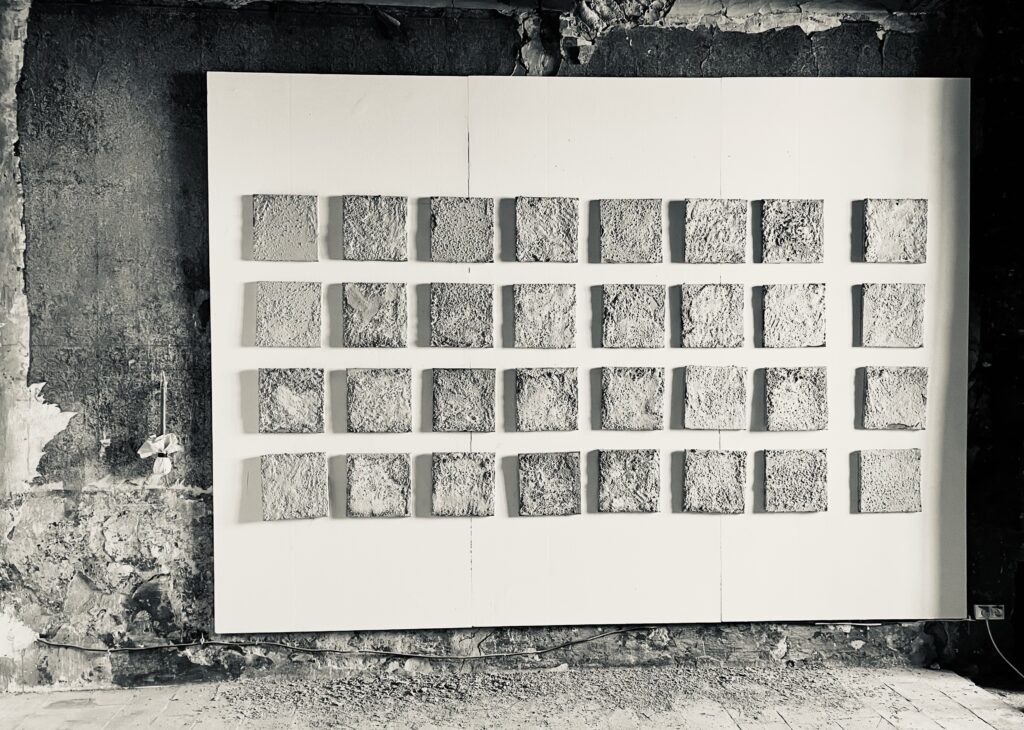
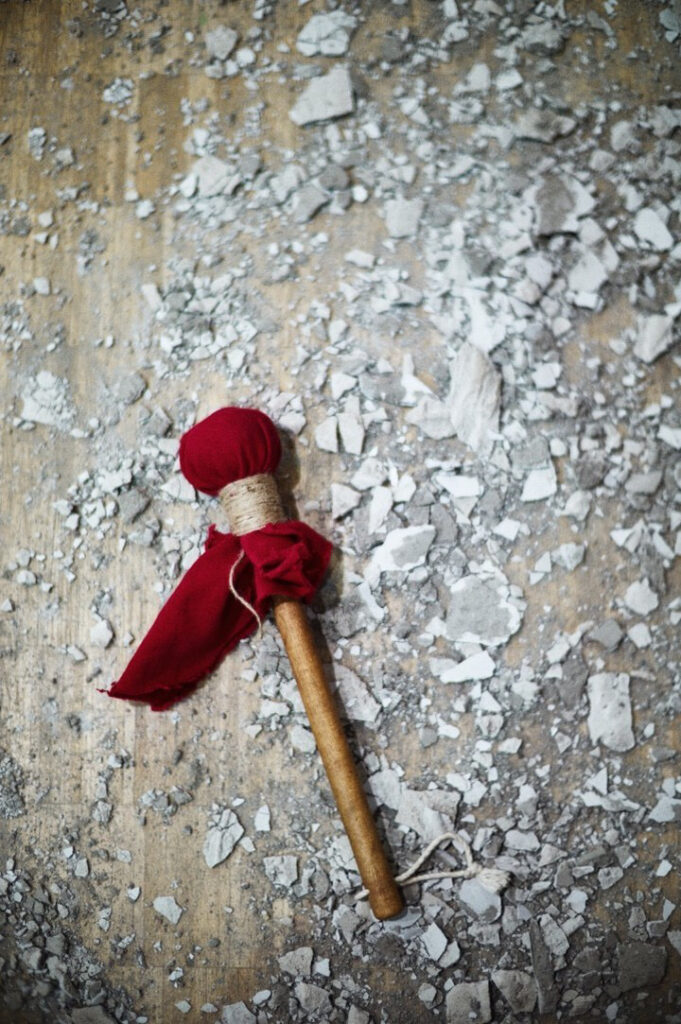
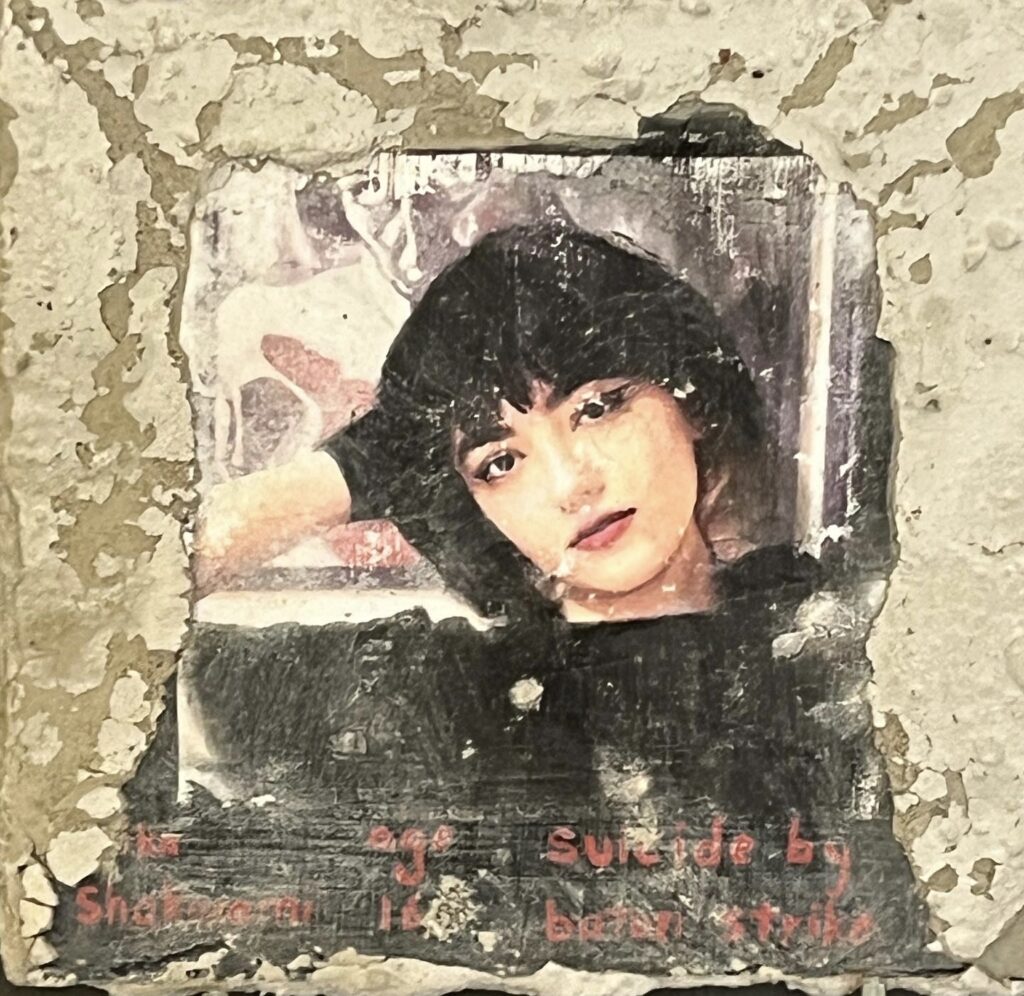
Concrete confronts the hidden mass grave of Khavaran through photos of martyrs from the Woman, Life, Freedom uprising. Visitors are invited to break the concrete covering their images, to resist the Islamic regime’s attempt to bury truth. Each revealed face becomes an act of freedom, releasing forgotten souls and reminding us that resistance is the path to liberation.


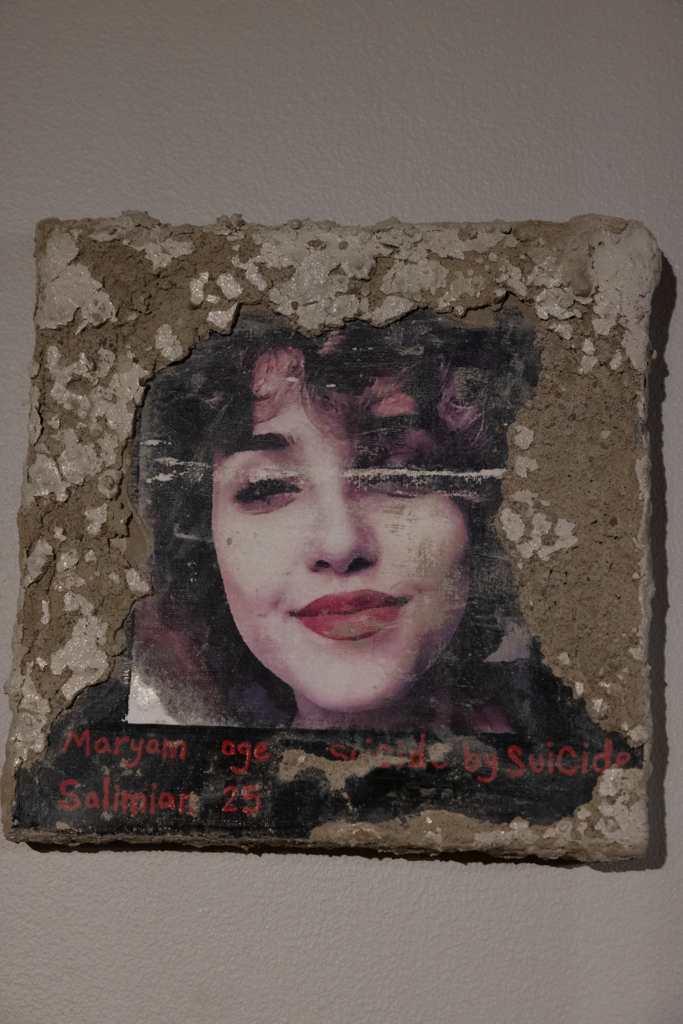
Aida Roustami was a doctor in Iran. Outraged by the violence of the regime against Iranians protesting the murder of Mahsa Amini, Aida offered to treat injured protestors without denouncing them to the government forces intent on arresting anyone who turned out to share their anger and sadness. Aida died in police custody after days of torture, presumably because she would not share the names of her patients. She is one of the portraits in Sadaf’s exhibit. Like all the others, her portrait is covered in concrete, a 30x30cm gray square, bleak and void of any trace of what lies beneath. But this is not an exhibit of one death, rather of a mass campaign of terror. Rows and rows of gray, concrete squares fill the exhibit. A mass grave.

Majid Reza Rahnavard was a young man who had attended a protest. Riding in a car that was deemed suspicious by the notorious Basij police force, he was arrested and beaten. Leaving the courtroom after his death sentence was handed down, his broken arm in a sling and his eyes blindfolded, he responded to a reporter’s question that his final wish was that people would play happy music and dance by his grave. Majid Reza’s portrait is also a 30x30cm gray square. But there is joy in his eyes, and we discover that. In fact, all of the portraits are joyful and beautiful once they are revealed. The concrete falls away and while the death and the disappearance are still concrete, so is the joy and life in their eyes.

Mahsa Amini was not an activist or a protestor or a dissident. Mahsa Amini ran a small shop with her family. Her death was widely publicised because she was a religious woman wearing a veil- and because some of her hair was showing when she was arrested and subsequently died in police custody. Her death became the spark that set off the current explosion of anger shaking Iran today. 


SETTING


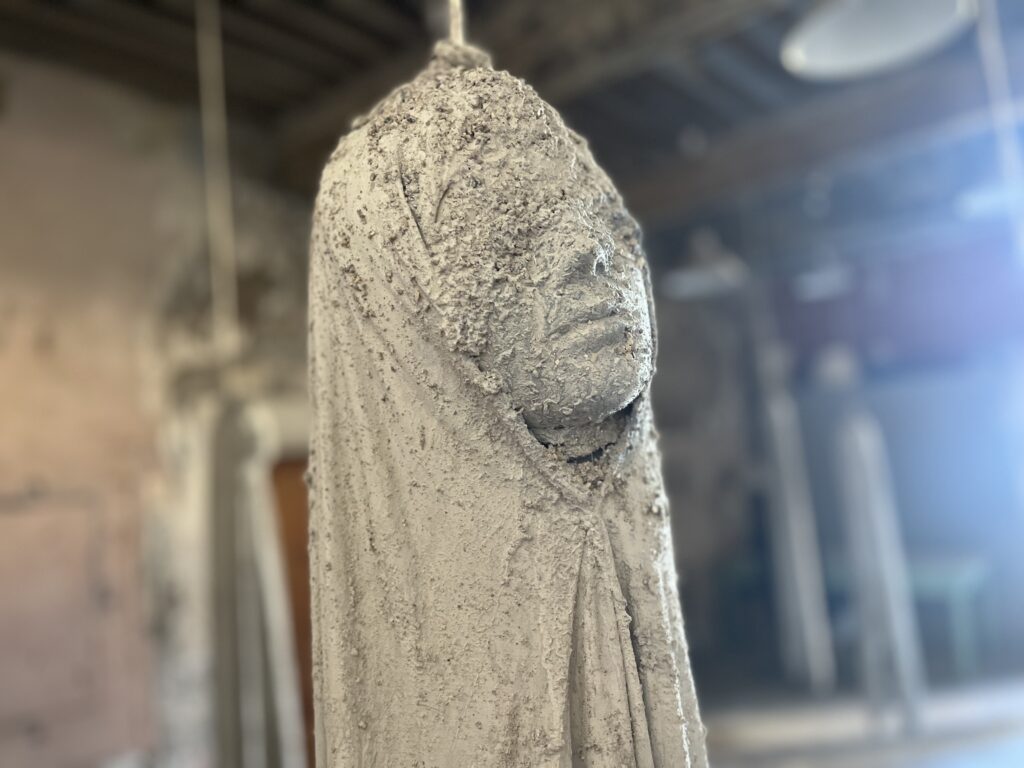
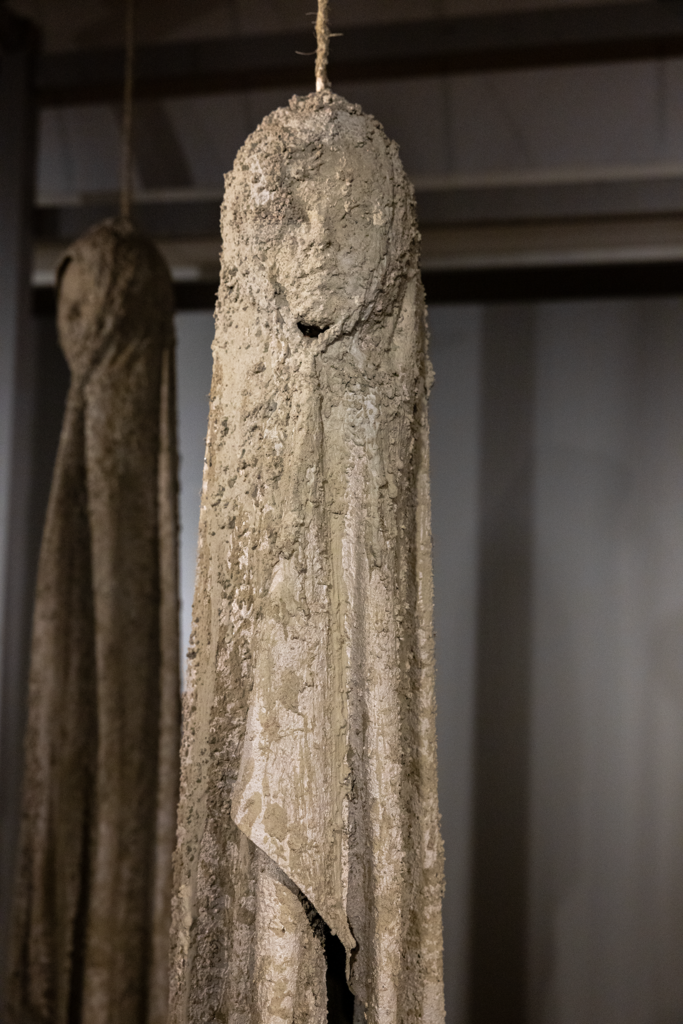
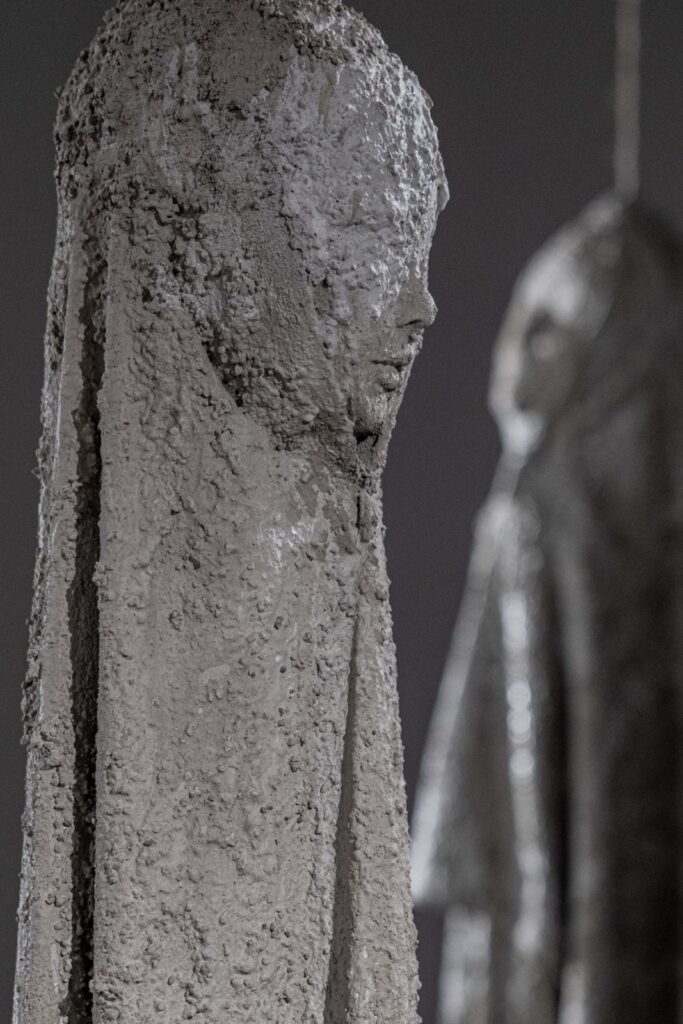
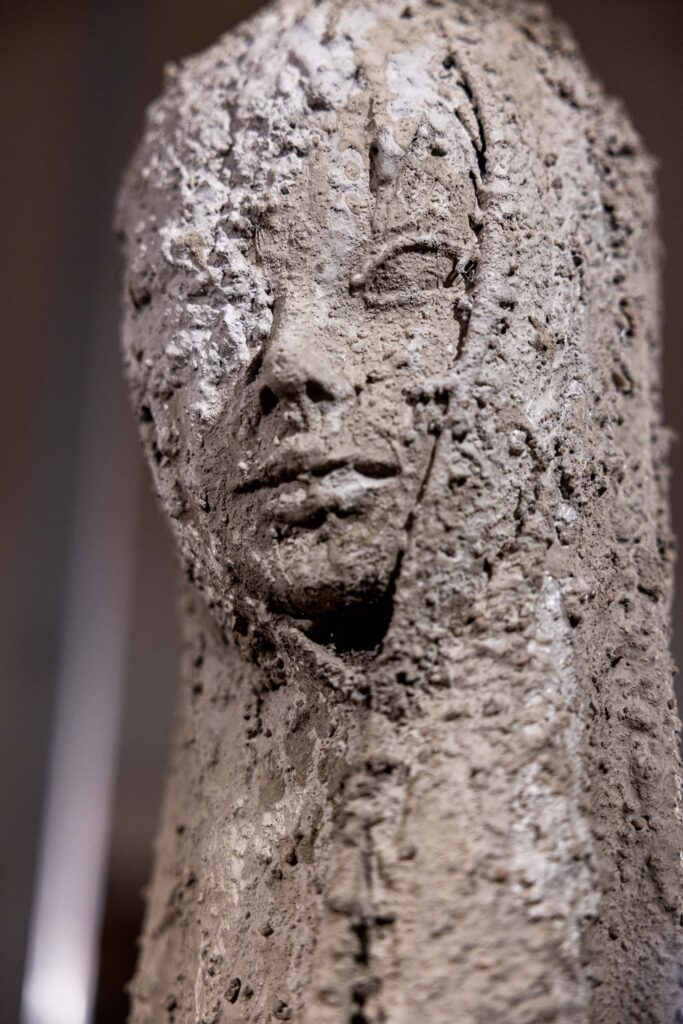
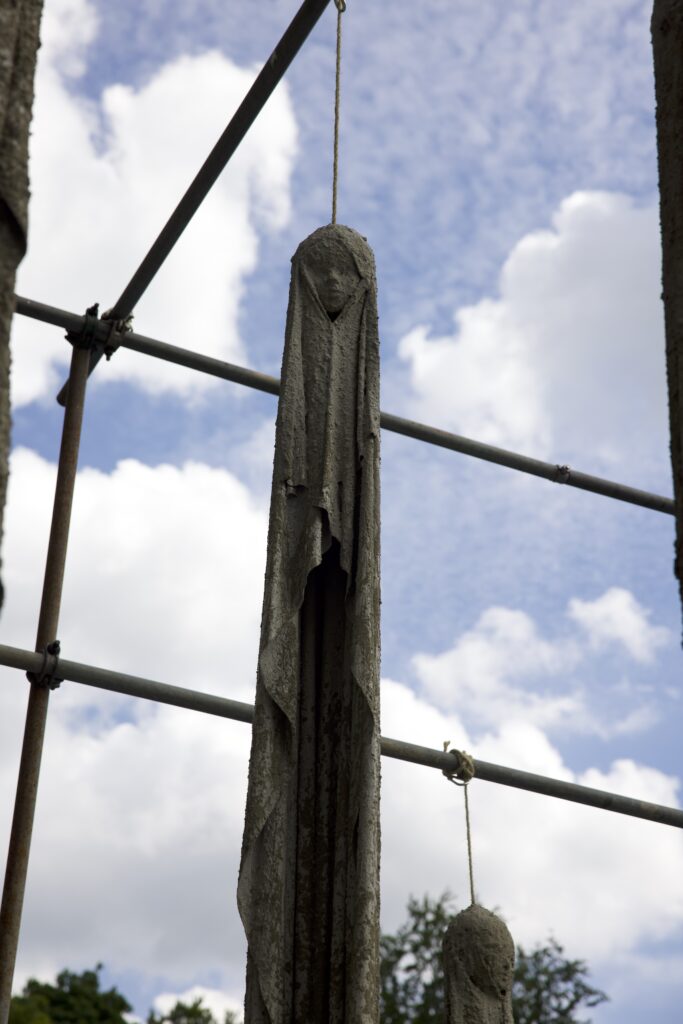
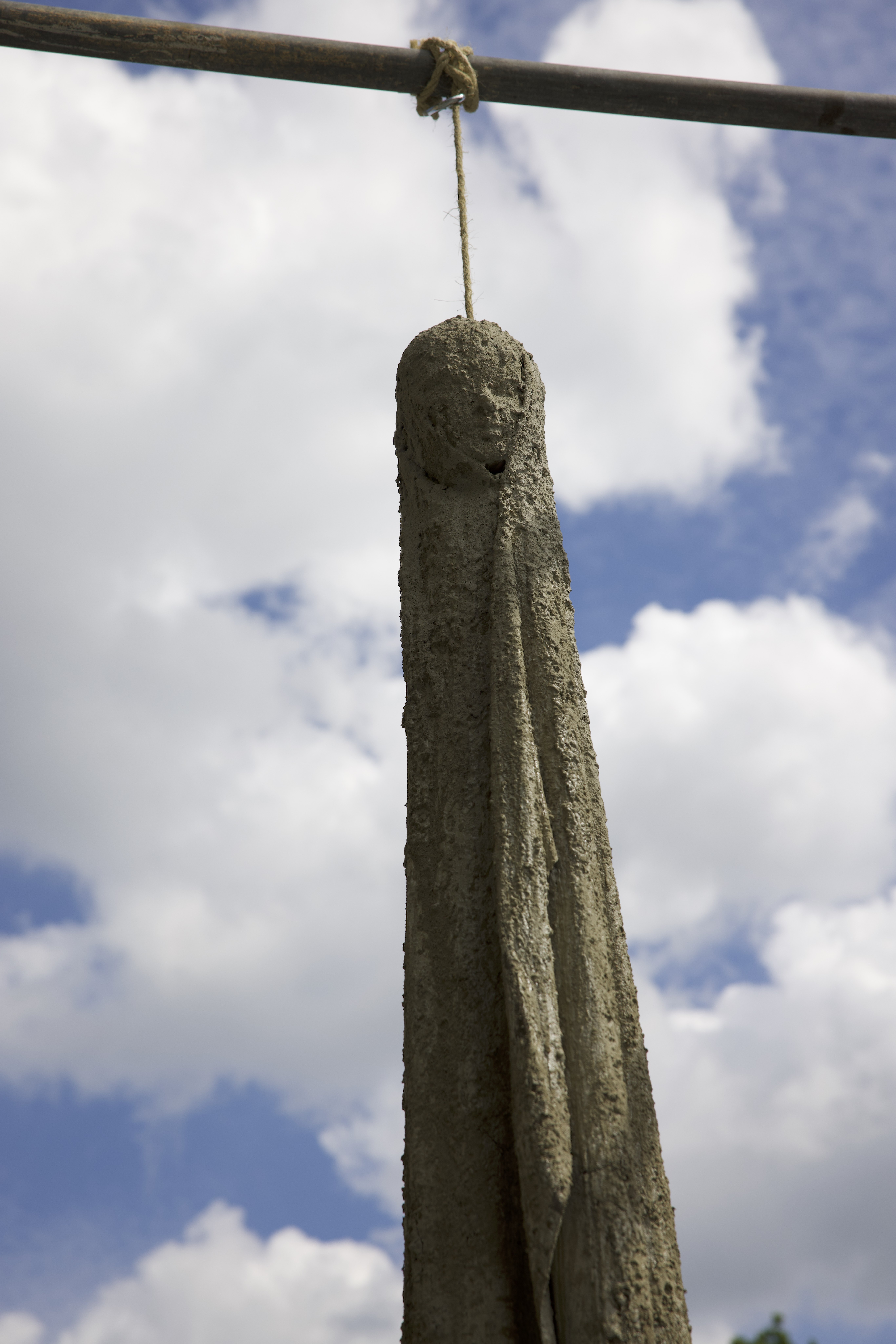
SETTING draws from both personal and collective experiences of women in  Iran. The statues and the concrete-covered women’s faces represent what Sadaf Ahmadi has fought against throughout her life, and what she still sees in Iran today. The artwork conveys a sense of the isolation that Sadaf Ahmadi herself experienced, before she began to break free as a teenager. She describes the situation of women as a self-imposed prison and a disembodiment demanded of women who want to be considered appropriate and gain the advantages that come from submitting to the laws. This is also reflected in the absence of bodies, as women are denied the right to their bodies and identities.

Photos: Sadaf Ahmadi

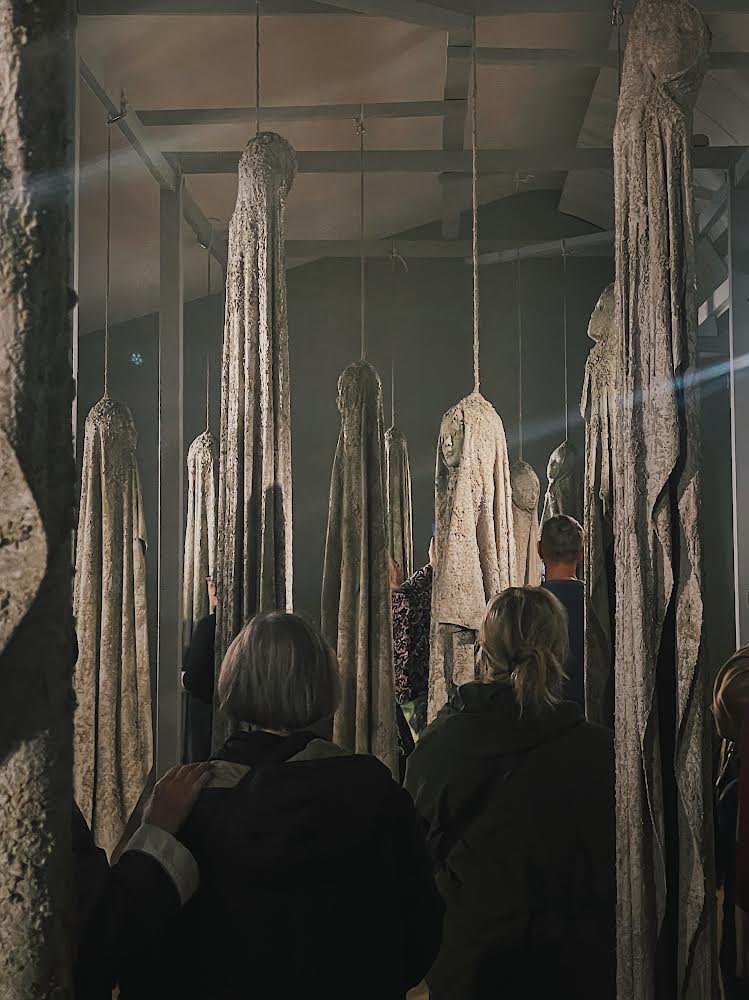
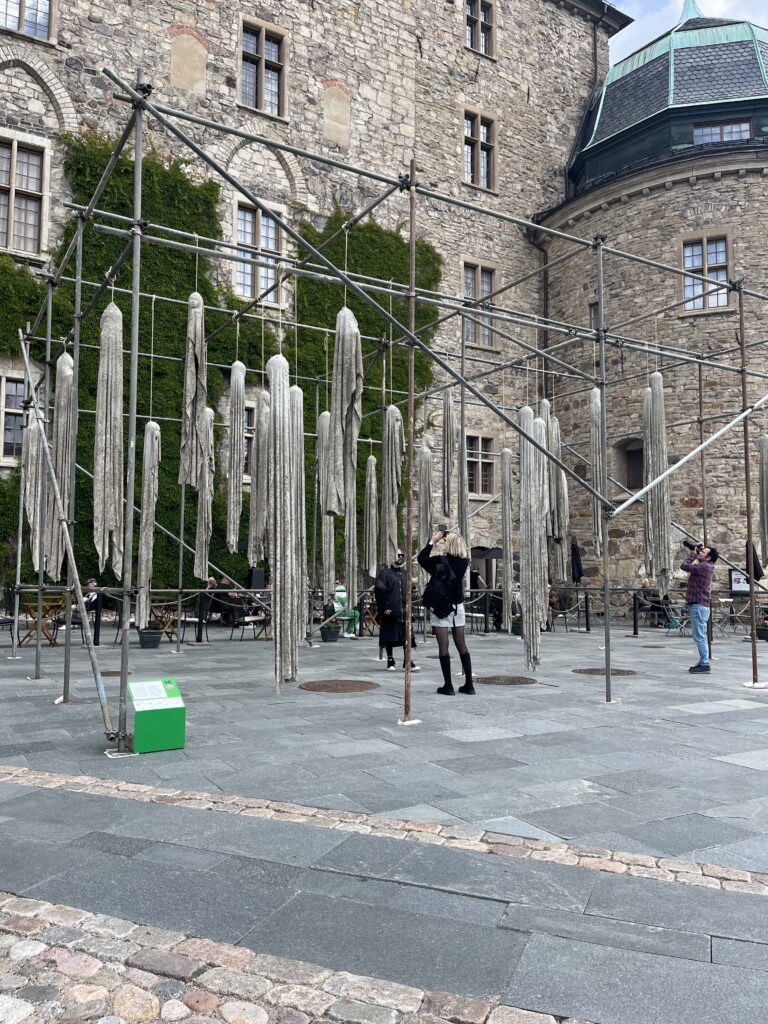
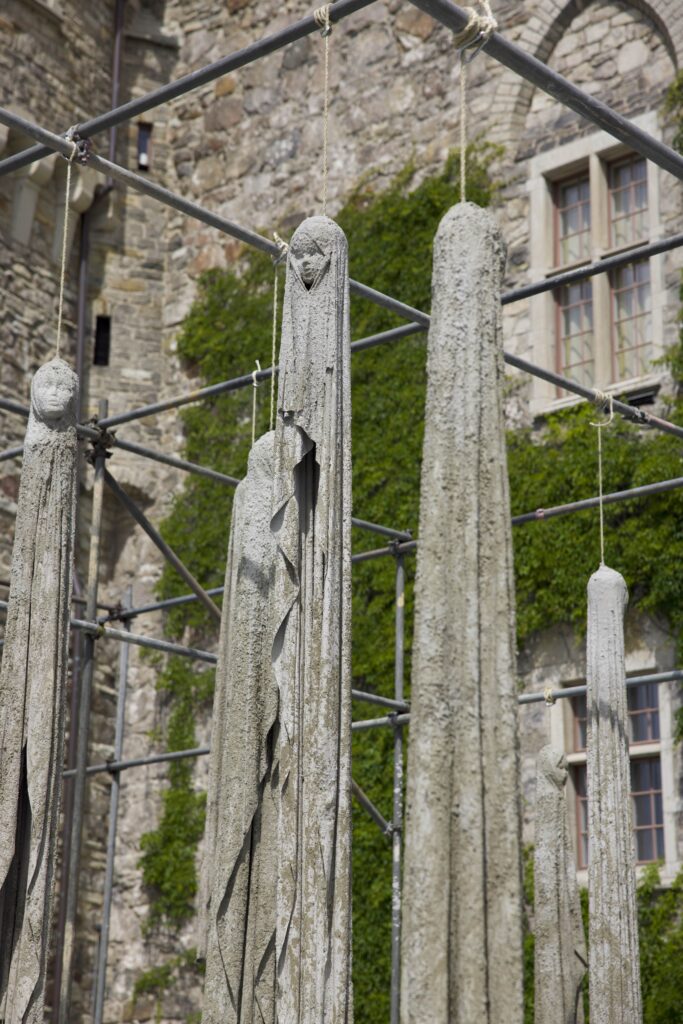
This exhibition showcased 10 crafted concrete  heads adorned with long veil-like hijabs. This artistic installation serves as a poignant expression of my early encounters with the political dimensions of mandatory hijab enforcement during my formative years in the 1990s. At the tender age of twelve, I began to grapple with the religious and ideological impositions surrounding hijab, a transition typically experienced by girls as they approach adulthood, often around the age of nine. However, my journey into religious observance had commenced four years earlier when I and my friends found ourselves compelled to participate in daily school prayers and adhere to a litany of regulation.


In 2023, following exhibitions that I held about the violence and injustice of the Islamic Republic in Iran towards women, in support of  the Woman, Life, Freedom movement, Kulturhuset, the art center in the city of Borås, in Sweden, shut down my installation.

BoråsTidning, the local newspaper of Borås city, published an interview by Hanna Grahn.

The exhibition, which had already been approved for display, was canceled due to fears that, following a Quran burning, it might provoke further anger among the city’s Muslim community.
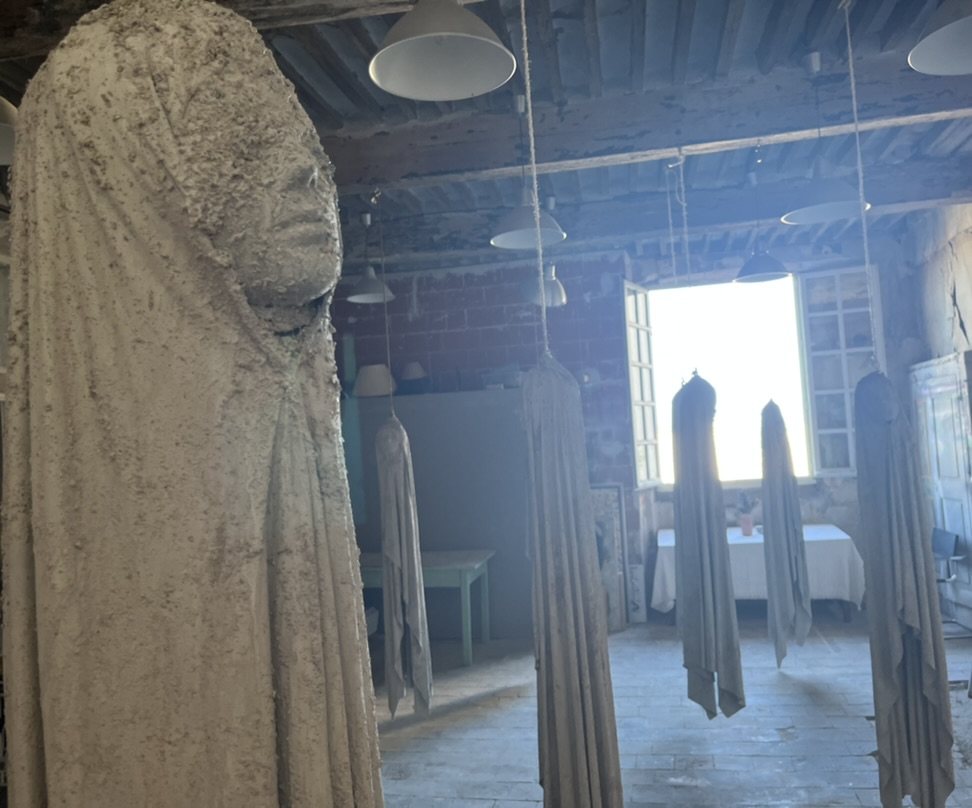
This decision outraged Sweden because the “Concrete Setting” installation Concretesetting depicted statues of veiled women covered in concrete and hanged. It was a protest art piece against the hijab and the policies of the Islamic Republic, also supporting the Woman, Life, Freedom movement, and should not have been equated with Quran burning.

The article sparked protests from most of the newspapers, news networks, and a great wave of media against the shutdown in Sweden and other European countries.

Finally SETTING  got the permit for showcasing in Artmuseum of Borås for 6 months

Democracy, freedom of speech, artistic freedom, and the right to protest against radical Islam were the main reasons for the collective outrage against the shutdown of the “Concrete Setting” piece. Not only did Swedish newspapers and media clearly cover the issue, but international outlets like Euronews and Le Monde also condemned the decision.

These protests lasted for two weeks, and every day I received calls from artists who had faced similar problems and were forced to struggle with self-censorship.


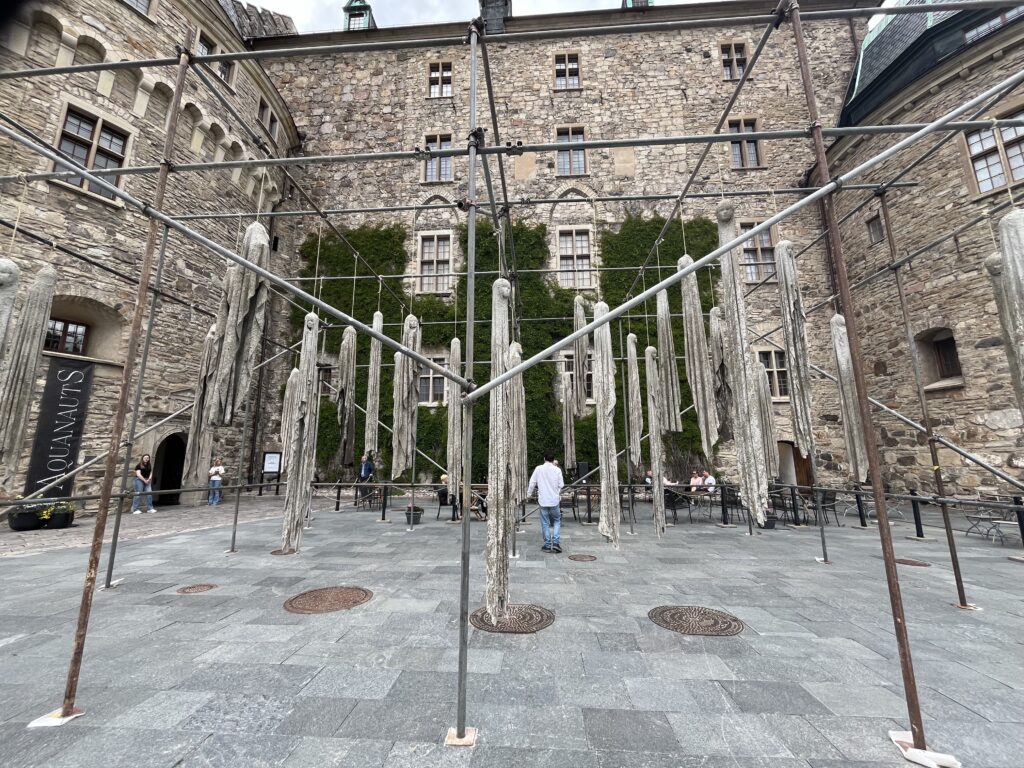
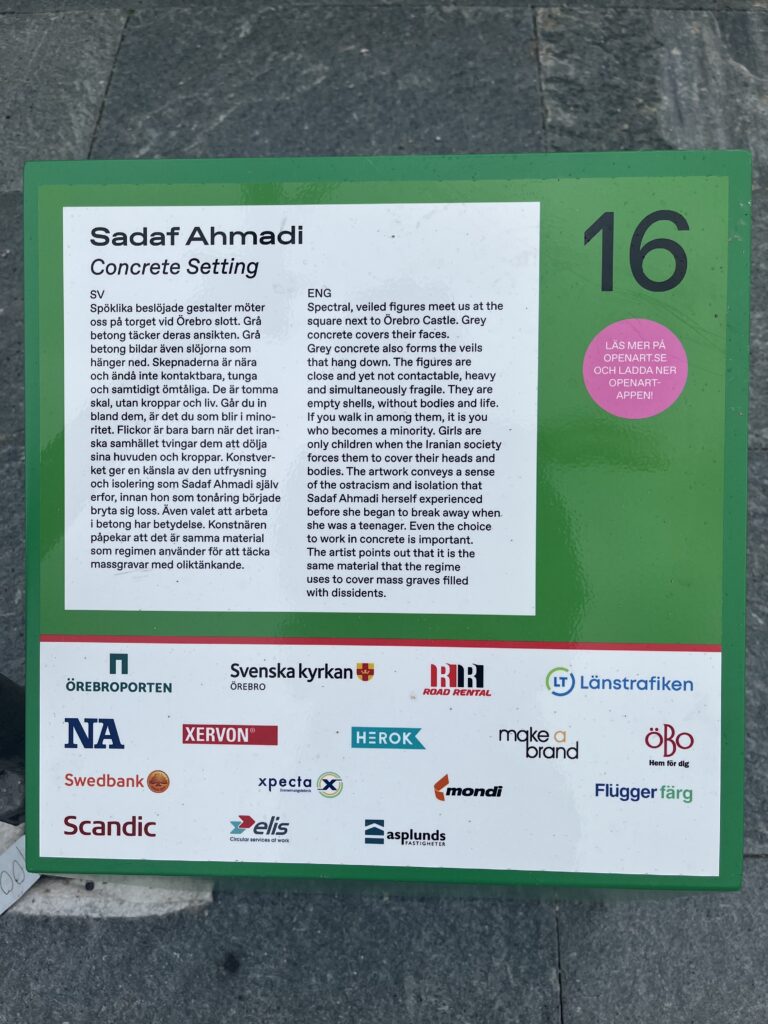
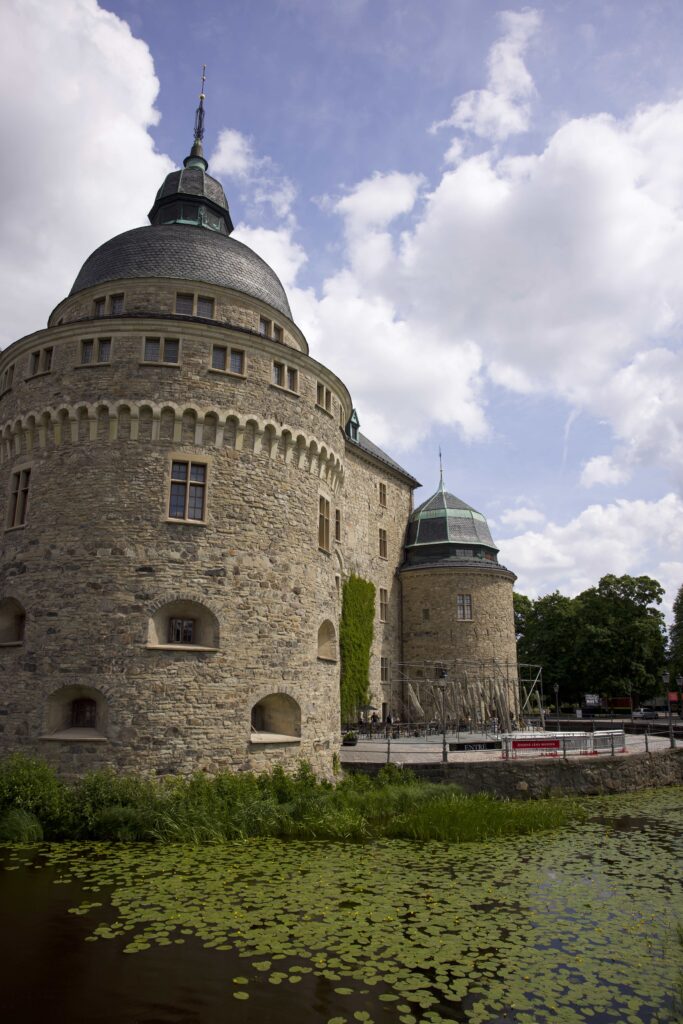
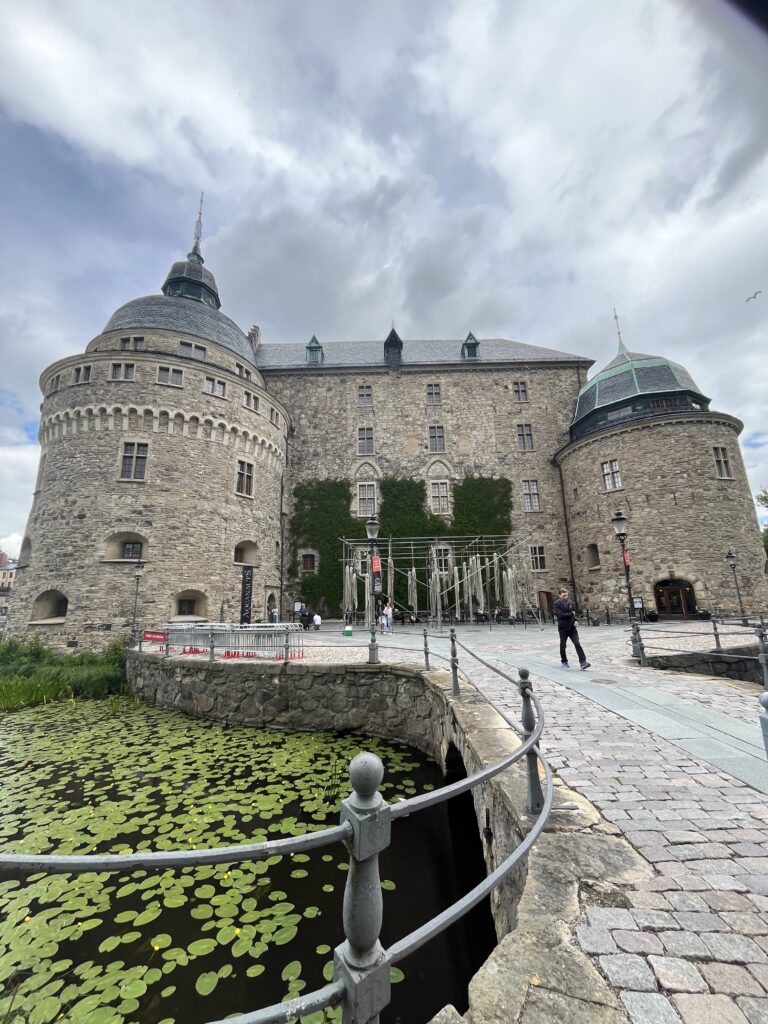
Finally, the Borås Konstmuseum took over the exhibition, and it also received another showing at the Örebro Biennial. 

This weekend marks the final days of the exhibition, and I feel deeply thankful, grateful, and honored to have completed these three phases of the “Concrete Setting” exhibits.

What was interesting to me was how this genuine freedom movement has, in various forms, had an impact in another part of the world.

Although in Iran, especially today’s Iran, we witness the suppression and humiliation of the hopes and efforts of freedom seekers, this experience, which was a rare one for me, proved that true desires find their way, even if they exist only as an idea of hope and a hidden sense of freedom.

BT: Do it again and do it right Ida Burén!

Hanna Grahn

https://www.bt.se/kultur/gor-om-och-gor-ratt-ida-buren/

Photo: Lily Porfavor Boråskonstmuseum 2023 Sweden

Photos are by: M.R. Heydary


Parisa Lilieström Minister of Cultur

Borås Sweden

Photo: M.R.Heydary

2023

Press release about SETTING exhibition:

Basil G.Galloway

Chairman og La Maison Des Chapitres

Curator of Setting exhibition in France

A room full of hanging, concreted figures in chadors. They were ghostly, almost just a wisp of air. Visually, it took my breath away, and conceptually it connected deeply with everyone who saw it. I realised I was seeing a light speed evolution of her work- her first two shows in one year, and ‘Setting’ was just as well received. It was also very widely written about, and was incorporated into the upcoming show in her new Swedish hometown.

I can’t say strongly enough how proud I was to work with and support Sadaf and her poignant, personal work. It’s devastating simplicity, the theatricality of it, the minimalism, the power- I knew that something special was being made and the international reaction validated all of her effort and my faith. Fast forward to late summer and the current political environment in Sweden deteriorated, now characterised by unrest around Quran burnings and anti-immigrant sentiment. And things changed in Boras. Suddenly, ’Setting’ was too controversial to be shown in a public forum. The work, already commissioned and programmed, was canceled due to security concerns. The fear, according to the administration of Kulturhuset in Boras, was that this work would be seen as anti-islamic and inflame an already tense situation in Sweden between the muslim community and the rest of Sweden. If you actually see and understand Sadaf’s work, you understand that it is deeply personal, that it is about her experiences growing up and living under the rules of the Islamic Republic of Iran. It is a criticism of an autocratic regime and the politicisation of Islam in her home country. It’s about what it’s like to grow up, live, and work as a woman there.

In my view the role of art in society is to express and to question, to reframe ideas through different lenses and in different ways through various media. To harness an artist’s creative power to express something – be it an idea, a feeling, a concept – in a novel way. The function of security, where it might unfortunately be necessary, is to protect freedoms, including that of artistic expression.It’s shocking to me that a liberal democracy that values the role of free speech so highly would consider that security concerns arising from a misreading of an exhibit critical of tyranny and oppression would constitute grounds to censor it in the public square. It comes as even more of a shock that the work would be commissioned and scheduled, and then abruptly withdrawn. As a curator, it’s hard to fathom that you would consider the opinions of people who won’t even try to understand the work when you decide whether or not to show it. As Sadaf has said, this is reminiscent more of what one would expect in Iran than in Sweden.

As much of a shock and a disappointment as this has been for Sadaf, it is with a sense of both vindication and gratitude that we have received a wave of support and offers for new venues to showcase this important and viscerally touching work, as well as a huge new swell of press coverage around this topic which is both deeply personal to her and relevant to the freedom of so many other people today. It continues to be with great pride that I support Sadaf Ahmadi, her work, and the freedom to show work critical of power and in support of human rights.

Photos: M.R.Heydary

Boråskonstmuseume 2023 Sweden


This work brings image of an inspiration from a childhood memory rooted in the educational environment of the Islamic regime in Iran. It addresses the idealised image of women in Islam, as taught and expected from a very early age.

The figures depicted are women in veils, metaphorically buried under the oppressive weight of Islamic laws. These laws strip them of their bodily autonomy, reducing them to mere shadows of themselves, whether they seek spiritual elevation or aspire to participate in society.
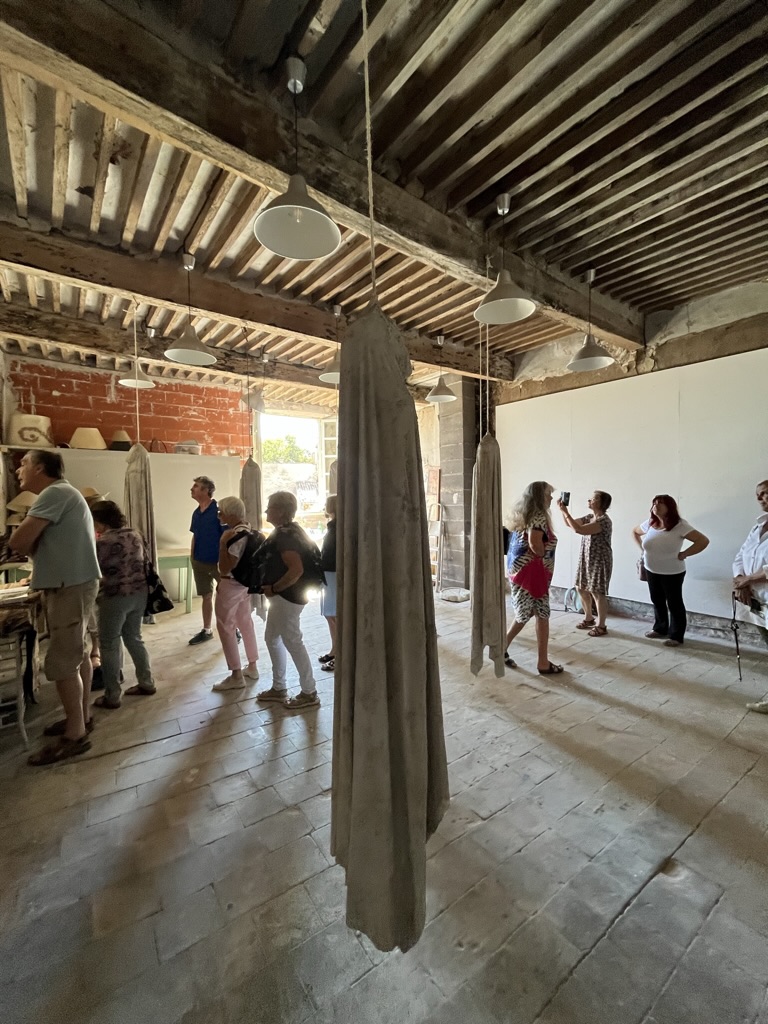
The inclusion of this piece in an open space exhibition by Open Art has a significant impact. It stands as a defiant act against the fear that hinders the expression of our true feelings, promoting enlightenment and awareness among others.

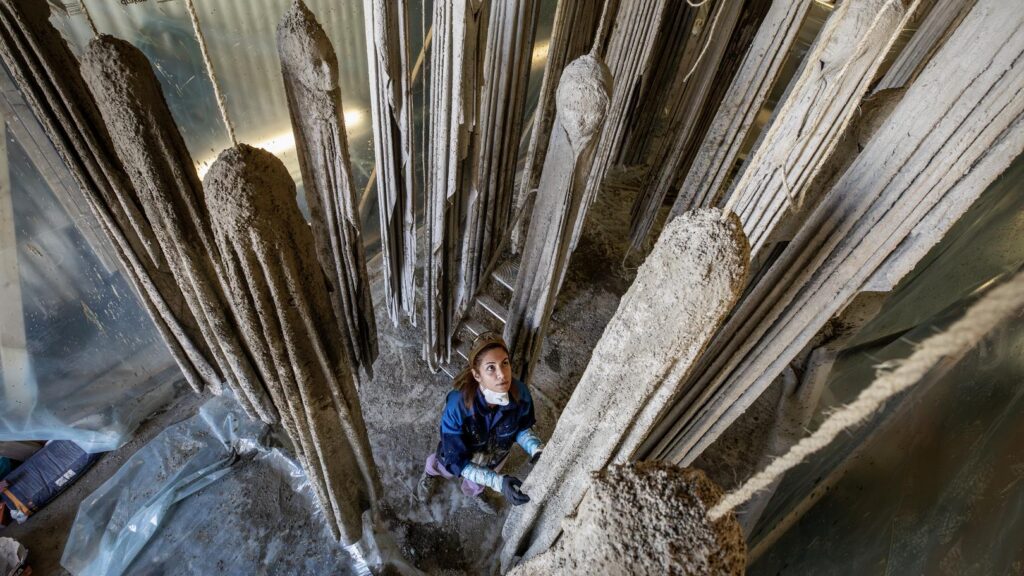
31 three-meter-tall statues of women‚ dangle from a high scaffold in one of Open Art’s workshops in Väster, Örebro, resembling a forest of veiled women. It is an impressive work, almost overwhelming, with a clear critique aimed at the Islamic regime in her homeland…

Photos: M.R.Heydary


Press release about SETTING in Openart:

NA Örebro   

Photo: Gabriel Rådström

Borås Konstmuseum: Concrete Setting

SVT: Art Exhibition in Borås Halted for Security Reasons

PUBLISHED September 6, 2023

The Borås Culture House chooses to cancel artist Sadaf Ahmadi’s exhibition for security reasons and the potential for people to be offended.

– It has direct connections to the situation with the Quran burnings, says Ida Burén, cultural chief in Borås.

Sadaf Ahmadi’s exhibition consists of two parts. One features works symbolizing women murdered by the regime in Iran. The other, now halted, comprises concrete-covered sculptures depicting women in full-length veils, known as chadors.

– It comes from my childhood when I had to cover my head and body. I have tried to show spirituality, but at the same time, the rule of the Islamic regime, says Sadaf Ahmadi, who fled Iran to escape the regime’s oppression.
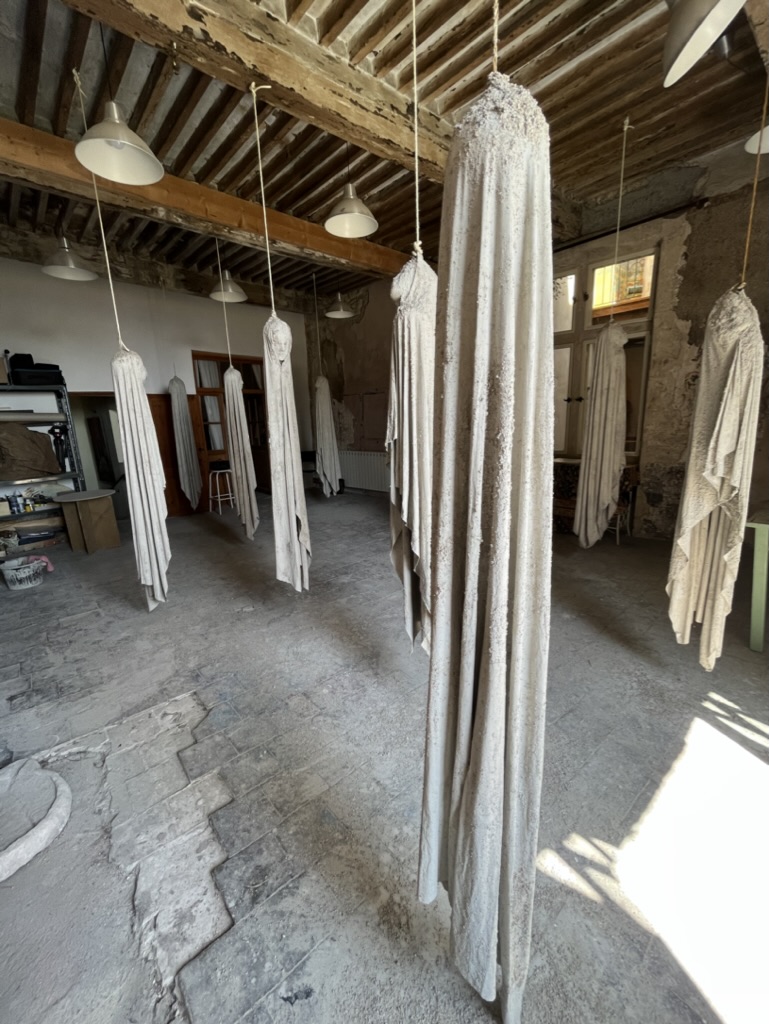
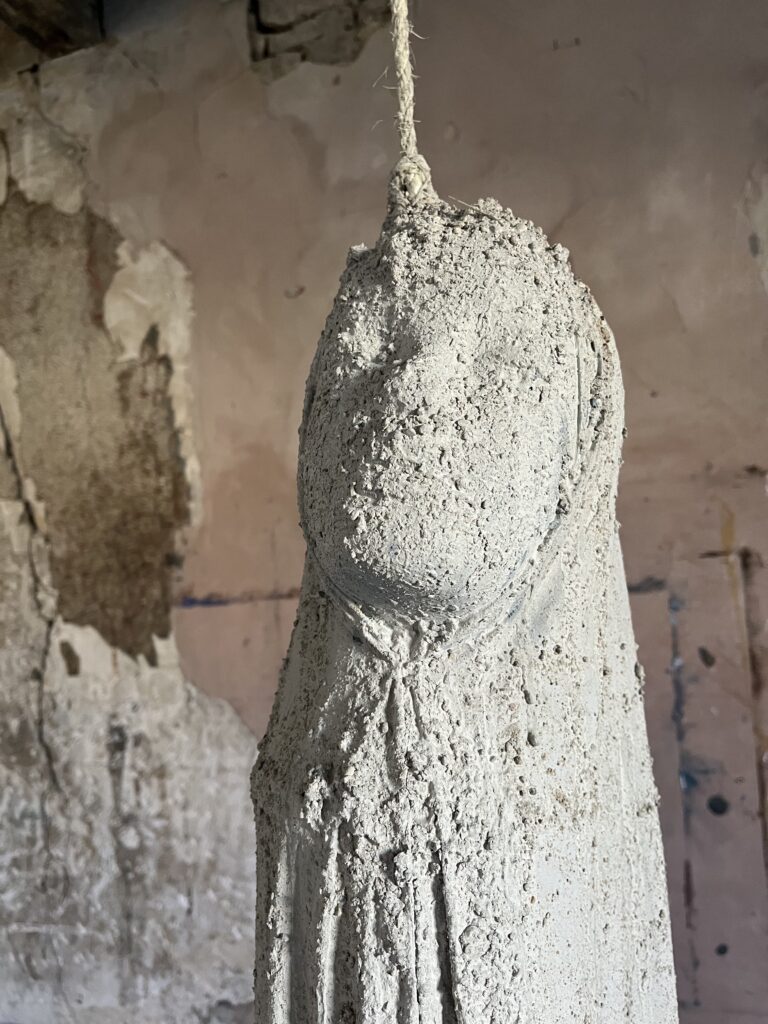
The exhibition was shown in France during the spring, and Sadaf Ahmadi had contact with the Borås Culture House, which booked the exhibition for September this year. But now they have changed their minds, as reported by Borås Tidning.

Joint risk assessment

Ida Burén, cultural chief in Borås, says the decision is based on a risk assessment made by the cultural administration together with the Center for Knowledge and Security in Borås.

– They share the image of the explosive power of the work and recommend a different placement of the work, and we have not been able to solve that practically, says Ida Burén.

The cultural chief argues that the work could be exposed to different forces, leading to potentially unsafe situations.

– The work could give rise to different types of interpretations, says Ida Burén.

Isn’t that the purpose of art?

– It is, and if we were in the art museum, we would have had the capacity to handle it, but in this open space, we cannot.

“Not comparable to Quran burnings”

But for Sadaf Ahmadi, it is a reminder of censorship in Iran.

– The strange thing for me is that they said this to me in Sweden, which is known for its freedom of expression and democracy. How is that possible?

But can’t you understand that people are cautious considering the elevated threat level?

– It is not possible to compare Quran burnings with an art exhibition; they are two completely different things. Besides, I am talking about human rights and women’s rights, says Sadaf Ahmadi.”

SVT: Sadaf Ahmadi turns down the Cultural Center's offer of a new venue: "Like a dark shoebox"

UPDATED September 8, 2023 | PUBLISHED September 7, 2023

Sadaf Ahmadi, the artist who is not allowed to exhibit hanging female statues in chadors in Borås, is currently receiving attention from various quarters. She is now receiving invitations, including one to exhibit in the European Parliament.

“This is criticism of political Islam, and I see strong reasons to support that,” says Charlie Weimers (SD), a Member of the European Parliament.

Sadaf Ahmadi confirms to SVT that she has received several invitations after it became known that she is not allowed to exhibit at Borås Cultural Center.

Politicians react

Charlie Weimers, an EU parliamentarian from the Sweden Democrats, invited Sadaf Ahmadi after learning that parts of the exhibition had been stopped.

“I have not yet received a response, but I have explained that if she chooses to accept, it is by no means a statement in favor of our party’s politics. It’s simply an opportunity to exhibit her art in the European Parliament,” he says.

Parliamentarians can invite

EU parliamentarians have the opportunity to exhibit art in the parliament twice during a mandate period. For example, representatives of the Liberals have previously exhibited the photo exhibition “Last Night in Sweden” after Trump’s statement in 2016, and Left Party’s Malin Björk has previously exhibited the art of Elisabeth Olsson Wallin.

“I cannot see a better way to use my place than to dedicate it to this,” says Charlie Weimers.

He strongly criticizes the decision of Borås Cultural Chief Ida Burén to stop parts of the exhibition in the foyer of Borås Cultural Center for security reasons.

“In this case, it is pure censorship. Ahmadi is clear that it is not criticism of Islam but of political Islam, the veil mandate, and the regime in Iran. And I see very strong reasons to support that.”

At the same time, we have the second-highest terrorism threat level in Sweden; don’t we need to protect Swedish citizens?

“We have to ask ourselves if the best way to protect Swedish citizens is to give up freedom of expression.”

Even cultural politicians in Uddevalla are interested in exhibiting Ahmadi’s art. Henrik Sundström (M), the second vice-chairman of the municipal board, says he is seeking contact with her.

"Faint-hearted and Timid"

PUBLISHED September 6, 2023

Borås Cultural Center chooses to cancel the exhibition of artist Sadaf Ahmadi for security reasons, citing the Quran burnings and the potential for people to be offended. Now, GP’s cultural chief and former Borås resident, Johan Hilton, reacts.

“I can understand feeling fear, but it is all the more important to show backbone in such a matter,” he says.

Artist Sadaf Ahmadi fled Iran to escape the regime’s oppression. Her exhibition has been shown in France during the spring, and now it was supposed to be the turn of Borås Cultural Center. However, after initially accepting the exhibition this spring, the Cultural Center now chooses to cancel.

A decision that GP’s cultural chief, Johan Hilton, does not understand at all.

“I think one is bending to a specter that doesn’t even exist, bending to imagined threats rather than concrete threats,” he says.

Listen to Johan Hilton about the canceled art exhibition in the clip.